Get Full Government Meeting Transcripts, Videos, & Alerts Forever!
Get email alerts on the Housing Development topic
No spam. Unsubscribe anytime.
CRA reallocates $1.3M to Villa La Anse townhomes; commissioners press for oversight, timeline
Summary
The Riviera Beach CRA approved a $1.3 million reallocation to finish construction financing for the 12-unit Villa La Anse townhome project, prompting questions about per-unit subsidy, procurement, reporting and clawback protections; vote was 5-0.
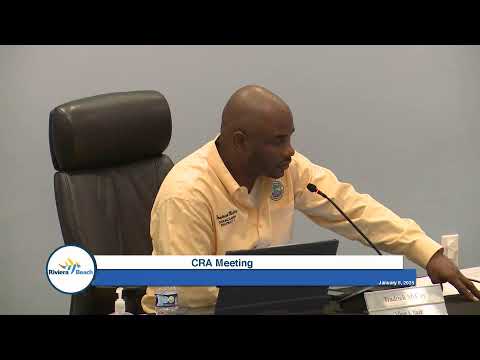
The Riviera Beach Community Redevelopment Agency on Jan. 8 approved Resolution No. 202502 to amend the agency's fiscal year 2024-25 capital projects budget, reallocating $1.3 million to complete construction financing for the Villa La Anse phase 1 townhome project. The board voted 5-0 after an extended discussion that focused on total cost, procurement and oversight.
Anita Jenkins, director of neighborhood services and interim CRA executive director, described the proposal: "This is necessitated the cost of the funding needed to complete the construction financing for the Veil LAAnse project. ... Our total, construction budget is 7,500,000. And we're asking that the dollars from, the phase 2 element in the capital budget be moved to phase 1 to allow us to start," Jenkins said. She said a lender had provided a financing commitment for the balance of construction funds and that several buyers had executed letters of interest.
Phase 1 is a 12-unit, for-sale townhome development at 11th Street and Avenue E. Jenkins told the board the CRA's cash participation on the project would be $1.0 million already in the budget plus the proposed $1.3 million, for a total CRA cash commitment of $2.3 million if the amendment is approved.
Commissioners and members of the public raised concerns about the scale and transparency of public funding. Several commissioners noted the reallocation would mean more than $100,000 of CRA subsidy per unit. Commissioner Spiritus and others asked why a private development partner had not been used and whether other subsidy sources (county or federal buyer-assistance programs) had been fully explored. Jenkins responded that buyer subsidies and down-payment assistance are separate from development financing and that the numbers in underwriting had been reviewed by a construction manager and lender.
Procurement and oversight were central themes of the debate. Commissioners asked whether the cityprocurement office would run the contractor selection; Jenkins and legal counsel said the CDC (the project's developer) is the project sponsor and a private developer, so the city's procurement rules would not strictly apply. Jenkins offered an "expedited" solicitation process and pledged local subcontractor participation; she also said the development agreement already includes reporting and clawback provisions and that monthly progress reporting would continue. Commissioners nevertheless asked for the amended development agreement and a written project timeline to return to the board at its next meeting (Jan. 22) and asked that staff provide monthly updates in writing in between meetings.
Public commenters were split. Brandi Davis Balsamo, a Riviera Beach resident, urged spending that prioritized existing housing stock and infrastructure repairs rather than funding new units: "Why are we putting a $100,000 each into 12 townhomes? 1,300,000 for townhomes. That seems like a crazy amount of money that we're putting in," she said. Resident Mary Brown spoke in favor of the project and urged the board to "green light" it, saying it could spur additional local investment.
After the discussion the board approved the budget amendment 5-0 and directed staff to return an amended development agreement, a written project timeline and continue regular reporting to the CRA board. Jenkins said permits were ready to be picked up and a lender had a firm commitment pending closing; she described draw-based construction payments coordinated with the lender and contractor.
Board members and staff said they would continue working on procurement approach and oversight language; the board emphasized the need for a guaranteed maximum price (GMP) and signed general-contractor agreement before construction movement and asked staff to bring clarity on clawback language in the development agreement.