Get Full Government Meeting Transcripts, Videos, & Alerts Forever!
Get email alerts on the Historic Preservation topic
No spam. Unsubscribe anytime.
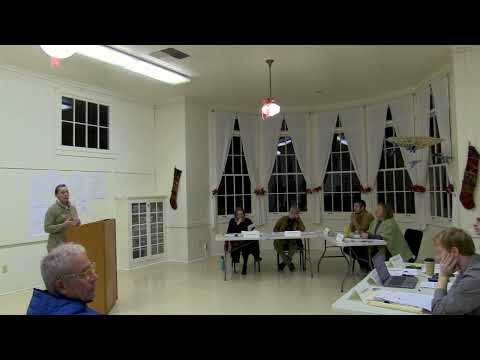
Mendocino review board denies replacement plan for Main Street water‑tower access; owners cited safety concerns
Summary
After extensive public comment and testimony from the property owner that the structure is unsafe, the Mendocino Historical Review Board voted 3–1 to deny the applicant’s current proposal to replace the water‑tower stairway and demolition/rebuild concept; the owner said the tower is structurally compromised and appealed options remain.
The Mendocino Historical Review Board on a 3–1 vote denied the application from the property owner to replace the Main Street water‑tower stairway with the proposal before the board (identified in the hearing as MHRV 2024‑009). The board’s action means the applicant may appeal the denial to the Mendocino County Board of Supervisors within the 10‑day appeal period.
Planner Liam Crowley summarized the property’s history and the application, telling the board the water tower dates to early 1900s construction and later reassemblies and that the structure is not listed separately in the county inventory though it “likely meets the definition of historically important.” Crowley said the application would remove the existing tower stairway and replace it with an uncovered staircase; the office had previously determined the county’s “duty to maintain” provisions did not apply because the tower is not specifically listed in the inventory. He also told the board a key finding for approval would be whether proposed work would “not unnecessarily damage or destroy” a structure of historic significance.
Owner Jennifer Raymond, speaking for the LLC that owns the Main Street property and the tower, said the structure is “at the end of its useful life” and reported that contractors and a structural engineer concluded the tower cannot be repaired in place and would require removal or full rebuild. Raymond said previous owners had invested in repairs but that the current condition left the owners facing a public‑safety and liability issue; she asked for a clear decision so the owners could proceed, including an appeal if necessary. The applicant provided cost estimates during the hearing: a pest‑control/repair estimate in the record at about $55,000 and a contractor estimate to demolish and rebuild at roughly $383,050; the owner also noted an appeal fee of $2,674.
Numerous residents, preservation advocates and local historians urged the board to preserve the tower. Speakers included a former Kelly House Museum curator who described the tower as a locally iconic feature and submitted letters and a petition with signatures opposing demolition; others urged exploring structural reinforcement and targeted repairs rather than removal. Volunteer citizen Matt O’Halloran told the board the tower was deteriorated and unsafe, urging removal of the stairway and replacement with a code‑compliant stair, but many opponents stressed the tower’s place in the town skyline and tourist appeal.
Board members discussed options including structural reinforcement, a temporary separate stair access, and whether the applicant had explored a back‑of‑house entrance or a standalone stairway that would preserve the tower as a visual landmark while removing public access. Staff noted that replacing the stairway could trigger Americans with Disabilities Act (ADA) requirements if project costs and changes reach thresholds that require an elevator or lift; building‑inspector input indicated accessibility features likely would be required for a full reconstruction.
After debate the board voted to deny the current proposal, 3–1. At the hearing staff advised that the denial is appealable to the Mendocino County Board of Supervisors and that the applicant may withdraw and refile or pursue appeals; the board also discussed the county’s 180‑day automatic‑approval rule if no action is taken but staff explained that the rule applies only when no action is taken within statutory time limits and is subject to extensions.
Public comment and submitted correspondence will remain part of the record as the property owner considers next steps; the decision leaves open options for engineering work focused on structural reinforcement, a redesigned access that does not use the existing tower as the primary public entrance, or an appeal to the Board of Supervisors.