Get Full Government Meeting Transcripts, Videos, & Alerts Forever!
Get email alerts on the Zoning Dog Park topic
No spam. Unsubscribe anytime.
Saint Francis council defers proposed private dog park at 3737 S. Kinnickinnic Avenue, directs staff to work with applicants
Summary
After an extended discussion about zoning, code changes and infrastructure needs, the Common Council deferred action on a proposed private, self‑service dog park at 3737 South Kinnickinnic Avenue and directed staff to work with the applicants to produce a comprehensive proposal.
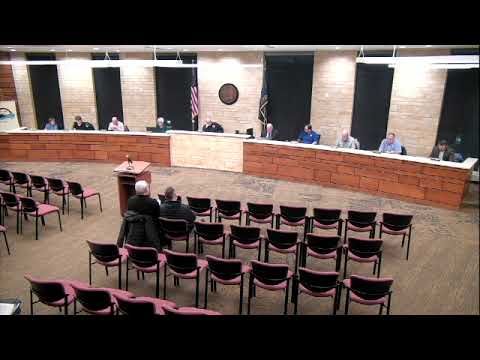
The Common Council of the City of Saint Francis on Jan. 7 deferred action on a request to change zoning for 3737 South Kinnickinnic Avenue to permit a private, reservation‑based dog park and directed staff to work with the applicants to refine a comprehensive proposal.
The proposal, which the Planning Commission recommended for scheduling a public hearing, would allow a fenced, reservation‑only dog park with no on‑site supervision and minimal structures beyond fencing. The council and staff identified multiple outstanding legal and logistical hurdles, including nonconformance with the city comprehensive plan, the zoning code and the fence and off‑street parking ordinances.
Paul (Staff member) summarized the planning and code issues the council would need to address before the city could lawfully approve the use. Paul said the site does not meet the city’s comprehensive plan goals because it would provide little or no increase in taxable improvements and therefore “it would be illegal for the council to approve it under state law” unless the comp plan and relevant code sections were changed.
Mark (Staff member) told the council the Planning Commission recommended scheduling a public hearing but flagged multiple required code amendments: changes to the comprehensive plan for the area, text changes to the zoning code to allow a passive animal use, revisions to the fence ordinance to permit a fully fenced yard where no principal building exists, and clarification of front‑yard setback language that currently references building placement. Mark also said the proposal does not meet the city’s off‑street parking provisions and the applicants had indicated they planned to rely on on‑street parking to satisfy the requirement.
An applicant who identified themself as the owner/operator described the concept as a private, self‑service facility for “household” dogs that do not do well in traditional dog parks. The applicant said bookings would use an online reservation system that issues time‑limited numeric entry codes for 50‑minute sessions, and the site would be monitored remotely with cameras and automated lock notifications. “It would be like a numerical code kind of system…your code would only be applicable and would only work for the 50‑minute time period that you’ve reserved in advance,” the applicant said.
Council members raised operational and public‑safety concerns that staff said would need to be resolved before the council could lawfully approve a rezoning. Issues discussed included: whether the use would include boarding or grooming (the applicant said it would not), how trespass or overstays would be enforced given the unstaffed model, waste and site maintenance, fence height and materials (the applicants proposed a minimum 6‑foot fence), utility needs for cameras and gate systems (electric meter drops and heated enclosures for modems), and whether the city should limit fence rule changes to commercial properties to avoid creating a precedent for residential front‑yard fencing.
Council members and staff discussed possible mitigations, including limiting any special‑use rezoning to a fixed time period, requiring a principal building or pre‑fabricated heated enclosure to house equipment and modem, and ensuring adequate parking and sanitary facilities. One council member noted precast utility buildings can be installed at lower cost than constructing a permanent building but still require utilities.
After discussion, a councilmember moved to defer the application to a future meeting and to direct staff to work with the applicants to develop a comprehensive proposal addressing the comp plan, zoning text, fence ordinance, parking, utilities and site operations. The motion passed unanimously.
The council did not schedule a public hearing on the rezoning at this meeting; staff will return with a revised application and proposed code changes if the applicants and staff produce a plan that addresses the issues identified.
The matter will return to the council after staff and the applicants present a refined plan and any proposed code or comp‑plan amendments.