Get Full Government Meeting Transcripts, Videos, & Alerts Forever!
Get email alerts on the Competency Based Education topic
No spam. Unsubscribe anytime.
Placer Union trustees pause districtwide CBE rollout, restore interim traditional grading with conditions
Summary
The Placer Union High School District Board of Trustees voted unanimously Tuesday to pause parts of a districtwide competency-based education rollout, restore an interim letter-grade structure and convene a working group to recommend permanent changes by June.
The Placer Union High School District Board of Trustees voted unanimously Tuesday to pause parts of the districtwide competency-based education (CBE) rollout and adopt an interim grading approach while a multi-stakeholder working group develops longer-term changes. The board approved an interim structure that restores letter marks (A, B, C), retains Incomplete and No Credit marks, requires use of proficiency scales for courses and permits departments to set how scales are weighted and whether to use a 4-point or 100-point gradebook for the spring term.
The action followed presentations from ATP bargaining-unit representatives and district administrators detailing a fall staff survey and implementation problems. Jacob, an ATP bargaining-unit representative, said the union received 127 responses from roughly 200 members and reported that “the majority of responses said they’ve had a negative experience with CB so far.” He told trustees many staff cited excessive grading time, training gaps and limited flexibility in the district’s gradebook setup.
The board’s decision is explicitly temporary and effective immediately. Trustees directed district staff to convene a working group of teachers, principals, counselors, students, parents, labor representatives and district administrators to recommend a final approach by June. The group will review the survey findings, spring-term outcomes and technical issues with the Aeries gradebook software.
Why it matters: Trustees and administrators said the change is intended to reduce confusion for students and families and to give teachers time to align course grading and expectations. Administrators reported a jump in incompletes and failing marks after full CBE implementation: district staff noted 632 students failed at least one course in the most recent semester and 354 students had at least one Incomplete recorded; 31 students had two or more incompletes.
Board and staff emphasized they were not abandoning CBE’s learning-focused goals. Trent, the district’s executive director involved in implementation, said the district wants to preserve “proficiency scales [that] communicate our learning expectations and progress,” while fixing grading and reporting problems that teachers and families reported. He and principals described variations among sites: some schools piloted elements of CBE and grading practices years ago, while others implemented them only this year.
Trustees publicly weighed several tensions the district must resolve: keeping consistent grading across a course so families and counselors can compare students; preserving the benefits of proficiency-based curriculum and clearer learning targets; and easing the workload and training burden for teachers. Several principals and teachers told the board they want flexibility by department or site so grading reflects course-specific priorities. A Colfax principal described a long development path at that school and urged the district to capture local lessons rather than erase them.
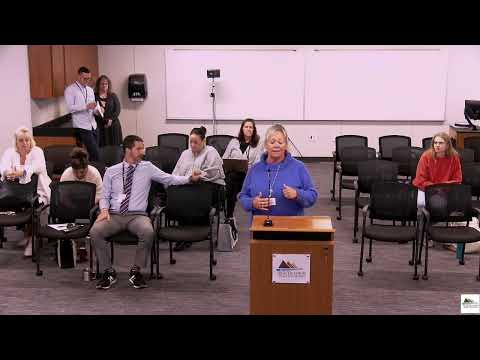
Students and parents also spoke during the meeting. Justin, a Del Oro student who testified at the board table, told trustees, “we get one shot at high school.” He asked the board to consider how changes affect college and career pathways and urged clarity for families so they could understand a student’s academic standing.
The motion approved by the board requires: (1) proficiency scales remain in use; (2) final marks for the interim term will be A, B, C, Incomplete (I) or No Credit (NC); (3) departments may set scale weights and decide whether to run gradebooks on a 4-point or 100-point model for the spring term; (4) teachers retain discretion to apply incompletes or convert narrowly missing students to a passing final mark after review; and (5) a district working group will return recommendations by June.
Trustees said the interim move is meant to reduce disruption and give the district time to form policy that preserves learning gains while addressing implementation problems. Trustee Underwood made the motion and Trustee Jeffrey seconded; the vote was recorded as unanimous.
Next steps: District staff will (a) notify families and staff about the interim structure and timeline, (b) provide principals and departments guidance on gradebook setup and weighting options, (c) convene the working group and (d) return a set of recommended revisions to board policy and administrative regulation by June. District leaders said training and technical fixes for Aeries and clearer parent communications are immediate priorities.
Trustees and district staff stressed that the interim decision does not foreclose longer-term CBE models, but it does stop the current, uniform grading mandate while the working group evaluates options and collects more data from students, parents and teachers.