Get Full Government Meeting Transcripts, Videos, & Alerts Forever!
Get email alerts on the K 12 Curriculum Math topic
No spam. Unsubscribe anytime.
East Ramapo school showcases Eureka Math Squared, student-driven centers and manipulatives at Elmwood Elementary
Summary
District walkthroughs at Elmwood Elementary highlighted use of the Eureka Math Squared curriculum, student-led small-group centers and manipulatives to build conceptual math understanding, with teachers describing daily individual check-ins and strategies to support bilingual students.
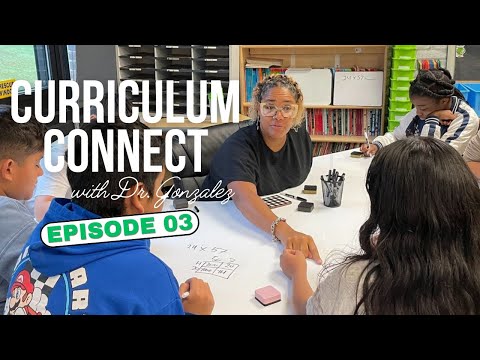
The East Ramapo Central School District demonstrated classroom use of the Eureka Math Squared curriculum and manipulatives at Elmwood Elementary in Spring Valley, highlighting student-driven small-group instruction and daily individual teacher check-ins.
District walkthroughs found teachers reporting that Eureka Math Squared materials are engaging for students and provide resources that help teachers deliver a coherent scope and sequence. Observers described classroom routines in which teachers circulate and act as facilitators while students work independently in centers.
The district said the curriculum supports deeper conceptual understanding rather than rote memorization, helping students grasp the “why” behind operations so they can apply knowledge in different contexts. Classroom demonstrations also showed extensive use of manipulatives that teachers said help students move from concrete to pictorial representations before reaching abstract notation.
“I like to teach math because I love numbers, and I like to have fun with the students. And they love to come and do math because I make it fun by playing games,” said Miss Carinello, a fifth-grade teacher at Elmwood Elementary, describing weekly games and classroom competitions she uses to engage students. “I physically meet with every student every day. I get at least 8 to 10 minutes with every group every day.”
An Elmwood staff member who led a manipulatives demonstration framed those tools as instructional bridges: “I always start a conversation on manipulatives by saying that anything that a students have not been have not learned well yet, it's because they have not been taught well yet. So mathematics is this is this is this, subject, you know, that has its own language and, can be very difficult for students if we're only expecting them to visualize what the math concept is all about.” The staff member said manipulatives let students construct equations and then move to pictorial and symbolic representations, and that drawing pictorial representations on assessments can demonstrate conceptual understanding.
Teachers at Elmwood described small-group centers that run independently, with routines and timers that students follow. The approach was presented as supporting differentiated instruction: teachers confer with small groups while other students work in centers, allowing for targeted practice and formative checks before exit tickets or assessments.
Staff noted manipulatives can particularly support bilingual and English-as-an-additional-language (EAL) students who may not yet understand vocabulary but can grasp concepts through gestures and hands-on actions.
The walkthrough paused at a fifth-grade classroom and concluded with an invitation to observe Mr. Hanel’s class using the same strategies.
Why this matters: The district’s classroom-level choices—curriculum materials, small-group structures and use of manipulatives—affect daily instruction and how teachers differentiate for multilingual learners and students needing conceptual support. The demonstration provides a snapshot of classroom practice rather than a policy decision or districtwide adoption vote.
Additional context: Elmwood Elementary serves grades 3–6. The presentation emphasized classroom routines and teacher facilitation; no district budget figures, formal adoption actions, or implementation timelines were presented during the walkthrough.