
Pennington County appraiser explains state property-tax changes and task force deliberations
Get AI-powered insights, summaries, and transcripts
Subscribe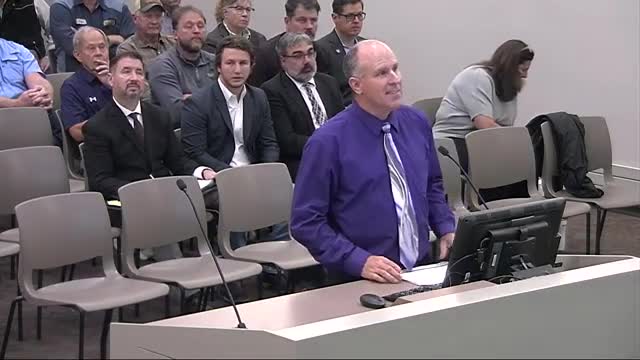
Summary
Pennington County’s director of equalization briefed the county commission on Oct. 7 about state law changes that cap total owner‑occupied valuation growth at 3% and tighten the definition of “new growth,” and about a state property‑tax task force due to report recommendations to the legislature.
Pennington County’s director of equalization told the county commission on Oct. 7 that state legislation enacted last year will substantially change how property assessments and taxing-entity levy requests work in the near term, and that a state task force is preparing recommendations that could reshape how property tax is funded.
Shannon Ritberger summarized the principal elements of Senate Bill 216 (the 2024 package), saying the most consequential change for residents is a temporary cap that limits the total valuation increase of owner-occupied properties in a county to 3% year-over-year. “It is not a cap on an individual home,” Ritberger said. “Any single property can increase or decrease by any amount; the cap applies to the total valuation of owner‑occupied properties in the county.”
Nut graf: The new rules also change how taxing entities may raise levy requests (they may increase by up to 3% or CPI, whichever is less, plus an allowance for new growth), but Ritberger said the definition and limit for “new growth” were tightened. Previously-defined “new growth” (property added to the tax roll) is now excluded unless it contributes at least 40% additional value to a parcel; the total new-growth allowance that entities may use for levy increases is capped at 2%.
Ritberger warned the board to expect revenue pressure in future budgets: if total owner‑occupied valuation across the county rises by more than 3% in an assessment year, staff must “cut 2% off of every property” pro‑rata so the total fits the 3% cap. She also said the elderly assessment freeze was broadened: income limits rose (from $45,000 to $65,000) and qualifying house valuation rose (from $300,000 to $500,000), and residency requirements changed. “I expect significantly more people are going to qualify for this,” Ritberger said, noting the county already saw an increase in frozen parcels over the last three years.
Ritberger reviewed the Comprehensive Property Tax Task Force, which met around the state this summer and had a final meeting scheduled the next day. She said the task force has discussed a wide range of ideas — optional county sales taxes dedicated to property tax relief, increases in state sales tax or ‘sin’ taxes, removing sales tax exemptions, and even constitutional proposals floated by private parties — but she emphasized the task force’s recommendations would be advisory to the legislature.
Why it matters: Ritberger told the board that Pennington County will face a different mix of assessment and levy dynamics in coming budget cycles; commissioners replied that careful budgeting and restraint at the county level are part of how local leaders hold down property-tax bills. Several commissioners said they were concerned about the combination of valuation caps and levy-limits and said the county should continue to monitor the task force and state legislative proposals closely.
No action was required of the board; staff said they will return with any needed implementation steps if the legislature or the task force outcome produces statutory changes that require county policy updates.