Get Full Government Meeting Transcripts, Videos, & Alerts Forever!
Get email alerts on the Utilities topic
No spam. Unsubscribe anytime.
City Utilities Defend Yellow Fever Creek Booster Station; Residents and Wildlife Group Urge Alternate Site
Summary
Cape Coral’s planned Yellow Fever Creek booster station and ground storage tanks drew opposition from residents and conservation groups at the Jan. 8 council meeting while the city’s utilities director said the site is already far along in design and moving forward to improve reclaimed‑water capacity.
Cape Coral’s planned Yellow Fever Creek booster station and ground storage tanks drew opposition from residents and conservation groups at the Jan. 8 council meeting while the city’s utilities director said the site is already far along in design and moving forward to improve reclaimed‑water capacity.
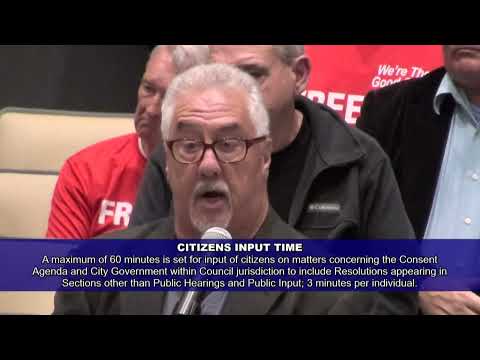
Noelle Tolbert and other Entrada residents and Judy Mitchell of Cape Coral Friends of Wildlife said the proposed 14‑acre site would require changes to the city comprehensive plan and restructure preserved land at Yellow Fever Creek Preserve. Tolbert warned that bright lighting and habitat fragmentation would harm species including gopher tortoise hatchlings, bald eagles, roseate spoonbills, wood storks and Florida bonneted bats, and urged the council to use a city‑owned mixed‑use parcel at Kismet and Del Prado instead.
Utilities director Jeff Pearson told council the city already owns the site designated for the booster station, that the project is at “90% design,” and that earlier siting alternatives were ruled out due to utility infrastructure and cost. Moving the booster station to the Academic Village (the alternative site suggested by residents) would require large‑diameter mains, additional off‑site infrastructure, extensive wetland mitigation and at a minimum an estimated $4 million in additional cost, Pearson said. He added that keeping the proposed site would expand the city’s reclaimed water storage and allow Cape Coral to purchase more reclaimed water from a regional supplier, which is currently limited by an existing 1,000,000‑gallon storage tank.
Why it matters: City staff said the booster station would significantly increase reclaimed water capacity and help reduce pressure on local groundwater supplies. Residents and wildlife groups say the preserve designation and wildlife impacts make the polar site inappropriate and urged the city to consider a municipal parcel near an industrial park.
Pearson also clarified technical and jurisdiction issues: the southern half of the preserve parcel is county property, and the city‑owned site selected for the booster station was included in Council Resolution 259‑22 adopting the project in December 2022. He said reclaimed water purchases cost about $0.30 per 1,000 gallons and that improved storage will increase the city’s ability to consume more reclaimed water and reduce groundwater stress.
Council reaction and next step: Council members asked staff to recount the project history and to answer resident questions; multiple council members noted the project has been in planning for several years and warned that changing course now would be costly and delay needed utility capacity. No formal decision or vote was taken at the Jan. 8 meeting.
Ending: The council heard both the environmental concerns and the utilities rationale; staff said it will keep stakeholders informed as the project proceeds to bid. Residents asked the council to pursue alternative city‑owned sites before construction begins.