Get Full Government Meeting Transcripts, Videos, & Alerts Forever!
Get email alerts on the State Of The City topic
No spam. Unsubscribe anytime.
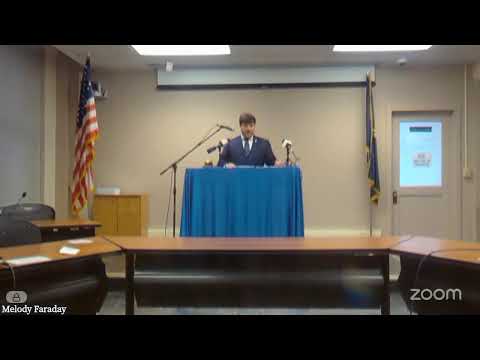
Mayor outlines housing, zoning rewrite, flood mitigation and transit support in State of the City address
Summary
Mayor (unnamed) delivered the State of the City address to the Ithaca Common Council, outlining priorities on housing, land-use reform, sustainability, transit and flood mitigation; the meeting date was not specified in the transcript.
Mayor (unnamed) delivered the State of the City address to the Ithaca Common Council, outlining priorities on housing, land-use reform, sustainability, transit and flood mitigation; the meeting date was not specified in the transcript.
The mayor said the city has taken “historic action to increase market supply and stability in the housing economy,” pointing to zoning-permit streamlining, short-term rental regulation to return units to the long-term market, and tenant protections against non-renewals. The address announced that the city has secured state funding to support a comprehensive rewrite of the zoning ordinance and said the rewrite will be paired with a revision of the comprehensive plan to boost housing supply and address rising property taxes. The mayor identified Director Nicholas, Deputy Director Wilson and planning staff as leads on the zoning effort; the transcript did not specify the exact dollar amount for the zoning grant.
On sustainability, the mayor said the city adopted a Justice40-style policy to integrate climate justice into workforce development, capital budgeting and city programming, and that the scope of the city’s Green New Deal work has been broadened to emphasize both emissions reduction and climate resilience. The mayor credited Director Evans and her team for the city’s leadership on sustainability.
The address included transit investments: the city invested $75,000 in Ithaca Bikeshare and the mayor said she will introduce a resolution to the Common Council to include operational support for the bikeshare program in the 2026 budget. The mayor called on councilors to support that budgetary change.
Economic development remarks noted the city submitted a downtown revitalization grant described as “the most competitive” in the city’s history; the mayor said the city is awaiting a decision from Governor Kathy Hochul’s administration.
On homelessness and encampment policy, the mayor praised county efforts to establish a low-barrier shelter and announced the creation of an advisory committee on encampments to be led by Deputy City Manager Recchio with Alderpersons Matos, Shapiro and Kiel and key staff. The committee’s charge, as stated in the address, is to assess the first year of the city’s pilot encampment policy, clarify the city’s role and capacity, and make recommendations to improve the city’s response.
A major focus of the address was new Federal Emergency Management Agency (FEMA) flood maps. The mayor said the city used U.S. Geological Survey data and field measurements to develop what city staff describe as a mitigation plan, and that the city has secured nearly $1,000,000 in funding to develop that plan. The mayor criticized FEMA’s updated maps as “extremely conservative” and said they rely on actuarial tables and theoretical modeling that the administration believes overstate projected lake levels. The mayor said the city will publish its full technical memo online later this month and has contacted its congressional representatives to advocate for revisions to FEMA’s approach.
The mayor also called for strengthening the city’s public information capacity and for fuller staffing of finance and public-facing departments to ensure transparent, reliable communications as the city implements the agenda she described.
No formal council votes or ordinance adoptions were recorded in the transcript provided; the items described in the address were presented as accomplishments, planned proposals, or administrative directives rather than completed legislative actions.
The address concluded with an appeal for community partnership as the city moves forward on housing, climate resilience, transit and communications priorities.