Get Full Government Meeting Transcripts, Videos, & Alerts Forever!
Get email alerts on the Cannabis Ordinance topic
No spam. Unsubscribe anytime.
Hot Springs council splits on ordinance changes to allow cannabis cultivation and manufacturing
Summary
After a lengthy public hearing with more than a dozen speakers, the Hot Springs City Council rejected a zoning amendment that would explicitly allow cannabis cultivation and manufacturing but approved parallel changes to the city's licensing code.
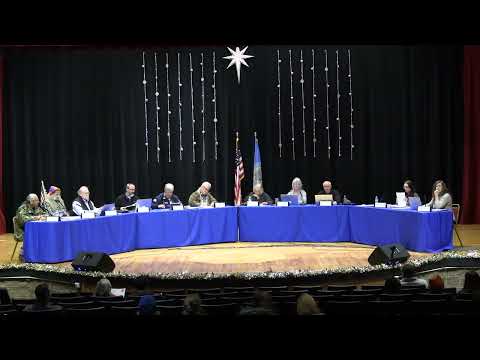
The Hot Springs City Council heard more than a dozen residents, business owners and public-safety advocates during a public hearing on proposed changes to the city's zoning and cannabis licensing ordinances, then split on two first-readings: councilmembers rejected zoning changes that would explicitly permit cultivation and manufacturing and approved revisions to the city's cannabis licensing chapter.
The contested measures were first-reading ordinances: No. 1262 would revise Title 15 (Land Use), amending Chapter 155 (zoning) sections 155.023 (General Commercial district), 155.025 (Highway Service district) and 155.058 (Cannabis Establishments) to allow cannabis establishments, including cultivation and manufacturing, in specified commercial zones. Ordinance 1263 would revise Title 9 (Business Regulations), Chapter 116 (Cannabis Establishments), including fee and licensing language.
The split reflected strong public participation and sharply different views about the local effects of allowing cultivation/manufacturing in a small city. Opponents cited odor, environmental and public-safety concerns and warned of property-value and quality-of-life impacts. Supporters and local dispensary representatives said medical patients rely on access, that a local grow could lower costs and tailor product for patients, and that the city's existing dispensary had not produced measurable crime problems.
Resident Kim Allen told the council she opposed the zoning change and urged members to "do not approve the ordinance changes," citing studies she said showed higher power use, pesticide and water impacts and a persistent odor problem near some grow operations. Celeste Nies and Beth Switzer argued the same point, saying the city's character and public safety could be harmed if cultivation or manufacturing were allowed within Hot Springs.
Employees and owners of local cannabis businesses pushed back. Jessica (last name on file with the city), who spoke for the local dispensary, described medical cases she said had benefited from cannabis and said a local grow would "lower the prices for those medications who desperately need this medication." Forrest Fanning, who identified himself as owner of Dakota Kine, said his business serves "more than 650 patients" monthly and that the facility has not generated crime-related calls, a claim he and other industry speakers asked council to weigh.
Council discussion emphasized that approving the zoning change would be a first step only: any cultivation or manufacturing operation would still need to apply to and be licensed by the state and meet whatever state requirements are adopted. Several council members said the public hearing had given them new information to consider before future votes.
Mayor Nelson (identified in meeting minutes) summarized the difficulty council members faced and praised public participation, saying, "this is probably the best public hearing I've ever sat through." After council debate, the motion to approve the first reading of ordinance 1262 failed; the council then approved the first reading of ordinance 1263 (the licensing/code changes).
Votes at a glance
- Ordinance 1262 (Title 15 zoning; allow cannabis establishments, cultivation and manufacturing in GC and HS zones): first reading failed after roll-call; council recorded two yes votes and a majority of no votes. (First reading motion failed.)
- Ordinance 1263 (Title 9 business regulations; cannabis establishment licensing language and fees): first reading passed. (First reading motion carried.)
What it means
Council members and the public will return to the issue at a future meeting if the proposals are put forward for second reading. Because state licensing is required for cultivation or manufacturing, the ordinances change the local regulatory framework but do not by themselves grant a state license or permit specific operations. Opponents urged the council to preserve Hot Springs' small-town character and raised operational concerns (odor control, waste, power/water use). Supporters stressed patient access, claimed local public-safety impacts have not increased with the existing dispensary and said local cultivation could reduce costs for patients.
Context and next steps
The city's first readings mean the council will continue to consider local rules. Council members repeatedly noted that state licensing and enforcement details remain an important variable; any business seeking cultivation or manufacturing would still need state approval. Some members asked staff to supply additional research and examples (locations and sizes of existing cultivation facilities elsewhere in the state) before a potential second reading.
Ending note
The public hearing and related council debate stretched through much of the evening as speakers on both sides presented lengthy testimony. Council members said they appreciated the turnout and indicated further study and follow-up would be part of their next steps.