Get Full Government Meeting Transcripts, Videos, & Alerts Forever!
Get email alerts on the Virtual Alternative Education topic
No spam. Unsubscribe anytime.
Fall River to pilot virtual pathway at RPA to reengage at‑risk students
Summary
District staff described a planned virtual pathway at the RPA alternative school to help chronically absent and suspended 10th–12th graders make academic progress; the subcommittee voted to refer the pilot to the full committee.
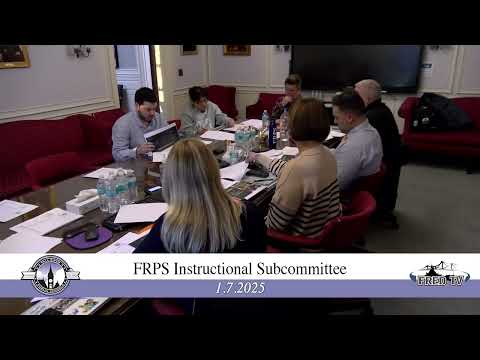
The Fall River Instructional Subcommittee heard Jan. 7 about a plan to pilot a virtual pathway at RPA beginning as soon as the late‑January semester change, and voted to refer the proposal to the full committee.
District staff said the pathway is intended to reengage chronically absent students and those on long suspensions by providing a live‑teacher virtual classroom during the school day, Edgenuity coursework with embedded tutoring, and an optional in‑person lab from 3 p.m. to 5 p.m. The plan targets students in grades 10–12 as an opt‑in pilot with an initial goal of roughly 15–20 students per class.
A staff presenter (identified as a district staff member in the meeting packet) told the subcommittee that RPA’s in‑person attendance has been low and the school is using Department of Education guidance for alternative schools to create a virtual pathway inside the existing alternative school framework rather than establishing an entirely separate virtual school. He said the virtual model would run live teacher support during academic periods 1–6, pair core teachers with a special educator for IEP support in the live virtual classroom, and rely on the Edgenuity platform’s tutors for out‑of‑class assistance.
Staff outlined operations and safeguards: weekly social‑emotional check‑ins, class attendance used as the primary gatekeeper for engagement, an escalation protocol (phone call after one missed day, a home visit after three missed days), and a 3–5 p.m. drop‑in lab for in‑person supports. The district plans to use Title I funds to support the 3–5 lab initially and will monitor usage to inform next year’s budgeting.
The presenter said the program is choice‑based and that teachers and principals were consulted in December; the principal (Principal Riley) and school attorney Michael Joyce reviewed draft agreements and attorney feedback was incorporated. Staff said they are awaiting DESE confirmation on whether a seat‑time waiver is required; the district expects to present a final proposal to the full school committee the following Monday, potentially as an approval “pending clearance” if DESE guidance is not yet final.
Committee members pressed on operations: whether there is a physical room students may use (staff said a room exists and students would have access, mainly in the 3–5 lab), attendance counting (students who show progress and attend minimum check‑ins would be counted present for the day), pilot sizing (15–20 students per class was the stated target), and academic integrity (Edgenuity’s built‑in AI tools plus a Class Relay tool to proctor exams were described).
A motion to refer the virtual pathway to the full committee carried on a roll call. The referral asks staff to return with a finalized legal agreement, a DESE seat‑time determination or waiver status, a staffing/cost plan and a timeline for a semester‑start rollout.