Get Full Government Meeting Transcripts, Videos, & Alerts Forever!
Get email alerts on the Historic Preservation topic
No spam. Unsubscribe anytime.
Historic review board and homeowners discuss improving HARB outreach and enforcement
Summary
HARB members and council discussed new outreach to property owners in Columbia’s historic district, possible mailings and a clearer application path for Historic Architectural Review Board (HARB) reviews and building permits; the board asked for materials and a procedural flowchart for applicants.
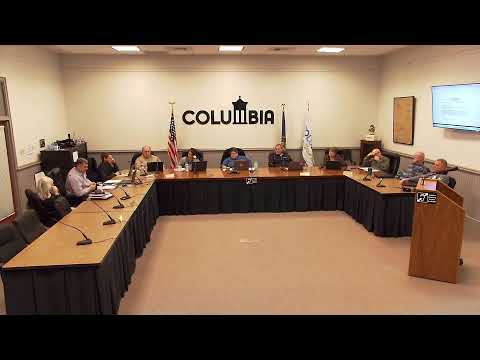
Members of the Historic Architectural Review Board (HARB), planning commissioners and council discussed ways to improve outreach and clarify the HARB review process at the Jan. 7 workshop.
Why it matters: Several residents and HARB members said property owners do not always know they are in the historic district or how HARB review affects permits and project timelines; clearer outreach and procedural materials could reduce conflicts and prevent post-construction enforcement actions.
HARB members said many property owners are unaware they are inside the historic district and do not understand the Certificate of Appropriateness (COA) or HARB timeline. Matthew Barley (HARB member) suggested a visual “flowchart” on the borough website showing the path an application takes through building permit review, HARB review and, if needed, borough council action, so applicants would see realistic timelines and next steps.
Althea Ramsey Kerrigan (HARB member) recommended two coordinated outreach steps: (1) a one-time mailed notification with a map and short guidance to every property owner in the district, and (2) recurring mailings tied to property transfers so new owners receive information. HARB members noted the borough maintains an ownership database pulled quarterly from county records, which could be used to target mailings.
Board members also discussed enforcement and stop-work procedures. Several attendees described cases where work began without permits; HARB members said the preferable process is for code enforcement to issue a stop-work order and require the property owner to submit proper permit drawings and materials before continuing. Members urged a minimum standard for HARB submissions: dimensioned/measured drawings, material specifications and a clear description of proposed work rather than a photograph of completed work.
HARB members said there is existing local funding for outreach; the Von Hess Foundation and other local funds have previously been available for education materials. Council asked HARB to draft a short informational mailing and promised to review the CO and building-permit processes to see whether the borough can better integrate HARB and building-permit steps.
Ending: HARB agreed to draft a proposed mailing and a flowchart of the application path for staff to publish online, and to work with borough staff to coordinate where outreach funds and CLG (Certified Local Government) resources might apply.