Get Full Government Meeting Transcripts, Videos, & Alerts Forever!
Get email alerts on the Governance Minutes topic
No spam. Unsubscribe anytime.
Columbia council debates clearer direction, shorter minutes for advisory boards
Summary
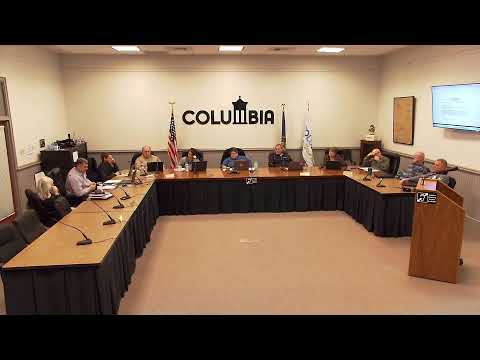
At a Jan. 7 borough workshop, council and board leaders discussed priorities and communication for advisory bodies, and whether staff should continue producing lengthy minutes or switch to shorter, agenda-based minutes supported by audio/video records and AI transcription.
Council and board leaders at a Columbia Borough workshop on Jan. 7 debated whether advisory boards should produce their own agendas and minutes and how the borough should handle recordings and transcription.
Council President David Lutz opened the workshop asking council to set “priorities and guidance for boards” so commissions such as the Planning Commission, Parks & Recreation and the HARB (Historic Architectural Review Board) receive clear direction and to address a growing backlog of staff work supporting those boards.
Why it matters: Board workloads and inconsistent minute-taking have increased demands on limited borough staff. Several board chairs and council members said the mismatch between expectations and staff capacity is causing delays in agenda distribution and minute publication.
Councilmembers and board leaders walked through options for resolving the workload and transparency issues. Mary (chair, Planning Commission) told council that historically “planning commission has never ever done their own minutes” and said staff-produced minutes provide consistency for legal and administrative records. Other commissioners and council members said minutes have become excessively long and recommended shorter, agenda-following summaries with a link to recorded video for full context.
Staff and council discussed technical and labor solutions: keeping a short set of minutes that records votes and identifies who spoke on each agenda item while maintaining full video or audio records online; using AI-assisted transcription to speed minute production; and allowing staff to generate minutes during regular hours from recordings rather than requiring overtime attendance at night meetings.
Paula (borough staff) described a proposed approach in which boards would submit a brief agenda-focused notes packet and staff would post audio/video recordings so citizens could review fuller discussion if they wanted more detail. Councilmember Michelle Kaufman and others asked for clear criteria on the minimal information minutes must contain — votes, motions and names of speakers — and for legal review of a simplified minutes format.
Board members, including Nathan Roche (Planning Commission), Liz (Parks & Rec), and others said clarity and consistent templates would help if boards do more of the minute-taking themselves; several also asked for training if the borough expects volunteer board members to prepare minutes.
Ending: Council asked staff to draft a short policy outlining the minimum content for minutes, procedures for staff to produce minutes from recordings, and training or templates for boards that opt to prepare their own minutes. Council agreed to continue the topic at the next meeting and to pilot a streamlined minutes approach while keeping full audio/video publicly available.
Votes at a glance: Council approved the meeting agenda at the opening roll call (motion by Councilperson Kaufman; second by Councilperson Bridal; outcome: approved). The meeting was later adjourned by motion (Kaufman; second Stahl; outcome: approved).