
District outlines ad hoc review of challenged library books, citing obscenity statute and age-appropriateness criteria
Get AI-powered insights, summaries, and transcripts
Subscribe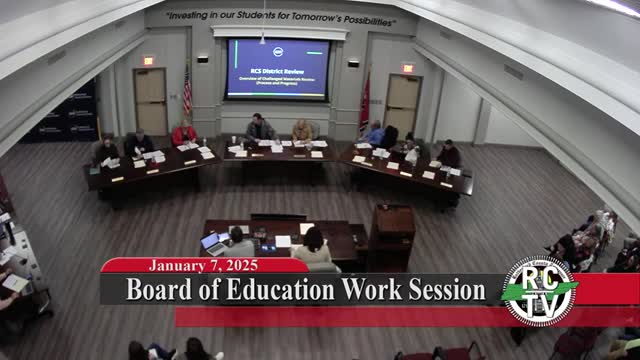
Summary
The district formed an ad hoc committee of middle- and high-school library media specialists to review roughly 160 challenged titles; staff described a three-tier review using the Miller test (TCA 39-17-901), statutory age-appropriateness definitions, and librarian professional judgment. Ten title reviews will be presented to the board Thursday.
Rutherford County Schools staff described an ad hoc district-level committee review process for approximately 160 library books challenged by patrons. The committee, composed initially of middle- and high-school library media specialists, has been evaluating titles using a three-tiered approach: first, an obscenity screen using the Miller-test standards and TCA 39-17-901; second, statutory age-appropriateness definitions that the district referenced; and third, routine librarian collection-development and grade-band considerations.
Staff said the review committee has at least two readers per title; where the first two reviewers disagree, a blind third reader serves as a tiebreaker. The committee chose the first 10 titles to be reviewed publicly based on reader assignment rather than any perceived priority; those ten summary reviews are attached to the board agenda and will be discussed at the Thursday meeting.
Staff emphasized transparency: titles and review summaries will be posted on the board agenda; reviewers’ recommendations and any noted inconsistencies will be documented. Staff said if a title were found to meet the Miller-test obscenity standard, the review would stop and the title would be removed from circulation. For titles that pass the Miller test, reviewers apply age-appropriateness criteria (including whether material contains depictions of sexual conduct that are patently offensive under the statutory definition) and professional collection-development standards to recommend retention, restricted placement by grade band, or removal.
Staff also addressed catalog- and data-management issues uncovered during the review. On some challenged items the district initially reported they were not in the catalog; follow-up checks found several items remained on school shelves but showed as removed from the searchable catalog due to how records were managed in the Follett system (examples included MARC records without copies assigned, or records deleted during an expedited removal process). Staff said they will clean up catalog records, note removals on a public removal page, and continue the review process.
Why it matters: The process reconciles legal obscenity standards with librarians’ professional collection judgments and statutory age-appropriateness definitions. Board members asked for clarity about how removed or previously-weeded titles will be notated so they do not inadvertently recirculate.
What’s next: The summary reviews for 10 titles will be presented Thursday; staff said any title recommendations and records of disagreement will be posted with the agenda. The board indicated it will take roll-call votes on individual titles at the Thursday meeting.