Get Full Government Meeting Transcripts, Videos, & Alerts Forever!
Get email alerts on the Comprehensive Plan topic
No spam. Unsubscribe anytime.
Joliet council adopts ordinance to create comprehensive plan advisory committee after heated debate over appointments
Summary
The Joliet City Council voted to establish a Comprehensive Plan Advisory Committee but faced sustained council and public pushback over who should serve. The ordinance passed; the council later approved a slate of appointees after discussion and an unsuccessful attempt to table the appointments until Jan. 21.
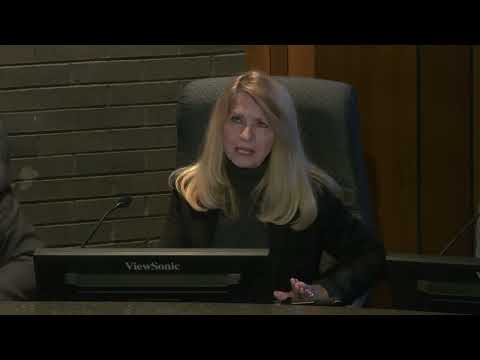
The City of Joliet City Council on Jan. 7 adopted an ordinance establishing a Comprehensive Plan Advisory Committee to guide an 18-to-24-month citywide comprehensive planning process, after extended debate over committee composition and whether appointments should be delayed.
The ordinance creating the advisory committee passed on a voice roll call after several council members and the mayor disputed whether nonresidents should be eligible for appointment and whether neighborhood councils had been adequately consulted. Mayor Terry Darcy, who proposed the initial slate, defended the selections as strategic outreach to stakeholders with broad reach; council members pressed for more resident representation and time to recommend additional appointments.
Council members who opposed delaying the ordinance said establishing the committee now would allow the planning process to begin and the city to move forward on outreach and subcommittees. Councilwoman Reardon, Councilman Cardenas, Councilman Clement, Councilman Guerrero, Councilman Hug, Councilwoman Ibarra, Councilman Mudrin, Councilwoman Kliman and Mayor Darcy voted to adopt the ordinance. No roll-call nay votes were recorded at the ordinance adoption. Todd Lindsey, the city attorney, clarified that the ordinance language mirrors City Code section 2260 and that the city code allows advisory-body membership where a person either is a resident or has sufficient ties to the city; the ordinance itself does not impose a strict residency requirement.
After the ordinance vote, the mayor presented a list of appointments to the committee: Elaine Bottomley; Cesar Cardenas; Nora Gruenberg; Jen Howard; Wendell Martin; Hugh O'Hara; Doug Prior; Steve Radich; JD Ross; Theresa Rouse; Diana Viveros; and Damon Zudinich. Some council members asked to delay approving the appointments to give time to consider additional nominees reflecting different lived experiences and sectors. A motion to table the appointments to the Jan. 21 meeting failed. The council then proceeded to a vote on the appointments; the motion to approve the mayor's list passed (motion carried as recorded on the Jan. 7 transcript).
City staff (assistant city staff member identified as Dustin in the meeting) explained the advisory committee's role: it will be a “force multiplier” for community engagement rather than the final decision-maker on plan content. The advisory committee is expected to attend monthly meetings, co‑lead working groups with staff and consultants, encourage residents to participate in outreach events and provide feedback on draft deliverables including the public engagement strategy, existing conditions report, and draft goals and objectives. The comprehensive plan process is intended to involve additional subcommittees or working groups that can broaden participation beyond the 15-member advisory committee.
During the debate, several council members and residents raised concerns that notification and consultation with neighborhood councils was insufficient and urged that remaining vacancies (the mayor noted three openings remained) be used to add residents and representatives from labor, health care and social services or other community-based perspectives. Council members asked staff to return with a preliminary list of possible subcommittees (for example: housing, transportation, economic development, education) so citizens who are not on the 15-member advisory committee still have pathways for involvement.
The council and staff repeatedly emphasized that the advisory committee's recommendations will be advisory only; final plan adoption remains with the full council after the consultant and public engagement work is completed. Council and staff described the timeline as roughly 18–24 months, with town-hall style workshops, targeted working groups, and draft review checkpoints. Dustin said the “raw materials” and outcomes will be driven by resident engagement "from the ground up, not from the top down." Mayor Darcy said the effort is intended to improve long-term quality of life and address issues such as truck traffic, annexation patterns and where industrial uses should be sited compared with housing.
Council members who expressed reservations did not oppose a comprehensive plan in principle but sought clearer communication and assurances about resident representation on subcommittees and transparency on the criteria for appointments. The ordinance establishing the committee was adopted on Jan. 7; the council approved the mayor’s slate of appointments that night after discussion and after a motion to table appointments failed.
The council directed staff to return with materials describing the subcommittee topics and a short timetable for filling the remaining seats so that the council and public can identify additional participants and ensure broader representation during the planning process.
Ending: The council set the advisory framework in place; the next steps will be staff and consultant outreach, a schedule of public workshops, and the filling of remaining committee seats. The council scheduled its next regular meeting for Jan. 21, 2025, where members said they expect to continue refining the committee structure and briefing materials.