Get Full Government Meeting Transcripts, Videos, & Alerts Forever!
Get email alerts on the Lead Service Line Replacement topic
No spam. Unsubscribe anytime.
Wausau commission discusses lead service line funding, weighing loans, bonds and grants
Summary
Commissioners heard details on state funding for lead service line replacement, including $8.9 million in principal forgiveness for private-side work and a $6.1 million low‑interest loan for the city’s public side; staff said final allocation decisions will go to the finance committee in January.
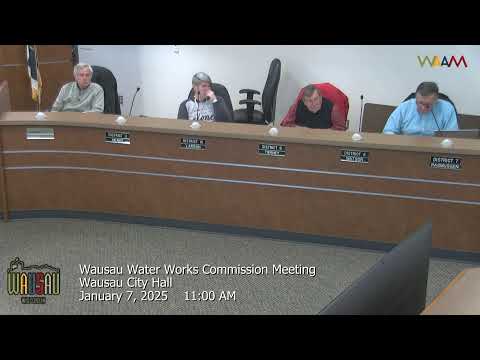
Wausau Water Works Commission members spent a lengthy portion of their Jan. 7 meeting examining how the city will use new state funding for lead service line (LSL) replacement.
The most immediate question is how to apply two separate program amounts: "the 8.9 is principal forgiveness for the private side" and "the 6.1 is the low interest loan for the city's public side of the lead service line replacement," said Eric, Director of Wausau Water Works.
Why it matters: The mix of principal forgiveness and low‑interest loans affects whether property owners, the utility or the city general fund ultimately carry costs. Commissioners said the classification of the $6.1 million loan — as a revenue bond, a general obligation bond or paid through tax increment financing (TIF) — will also affect the city’s legal debt limits and reporting.
Staff described the practical options under consideration. Eric said the $6.1 million portion could be structured as a general obligation bond backed by the city, a utility revenue bond, or possibly supported by tax increment financing. He said bond counsel (Quarles & Brady) and the city’s financial advisor, Ehlers, will be asked to present options to the finance committee beginning Jan. 14, with recommendations to follow on Jan. 28.
Mary Anne, Finance Director, reiterated that staff and consultants will evaluate how any borrowing fits within the utility’s rate structure and the city’s overall debt capacity, and that the city expects to close loans in February or March if plans are finalized.
Commissioners and staff also discussed scale: commissioners and staff estimated the total number of service lines proposed for replacement at roughly 1,900–2,000 lines citywide (public and private sides combined). Scott, a utility staff member, said the utility has prioritized older census tracts where many public‑side lines remain to be replaced.
On terms, staff said the low‑interest loan carries a roughly 0.25% interest rate over a 20‑year term for the public‑side portion. Eric said the principal‑forgiveness portion is targeted at the private side so customers would not receive special assessments for that portion.
No formal action was taken at the meeting. Commissioners directed staff to bring detailed options, including debt classification and rate implications, to the finance committee and later to council for a decision.
Looking ahead: Staff said bond counsel will present to council so elected officials can better understand whether the borrowing will count against the city’s general obligation cap and how it would be repaid.