Get Full Government Meeting Transcripts, Videos, & Alerts Forever!
Get email alerts on the Homeless Shelter Zoning topic
No spam. Unsubscribe anytime.
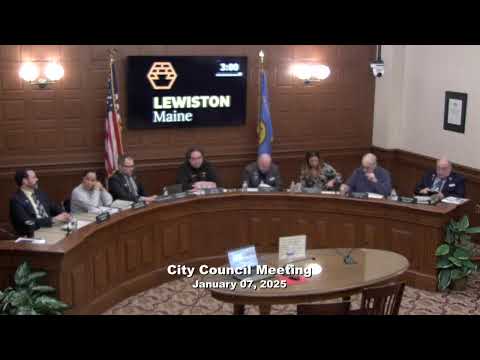
Lewiston council advances package to rewrite shelter rules, removes overlay and sets conditional-use criteria
Summary
Councilors gave first passage to multiple amendments that remove the city's homeless-shelter overlay and establish where different shelter types are allowed, add conditional-use review criteria and set buffers; votes on the package were unanimous at first passage.
The Lewiston City Council gave first passage to a set of zoning amendments that eliminate the city’s homeless-shelter overlay district and replace it with district-by-district rules about where family, youth and adult shelters may locate and what conditions they must meet.
Planner Hunter Norton summarized the planning board’s recommendations, which the council advanced on first passage by roll-call votes (each measure passed 7–0). The package includes changes to definitions (Article 2), edits to the official map (Article 3) and amendments to the city’s zoning district regulations (Article 11). The council also approved new conditional-use review criteria (Article 10) that planning staff and the planning board will apply to any shelter permit.
Key elements adopted or advanced on first passage: - Definitions (Article 2): The council revised the zoning definitions for shelters to distinguish 24-hour facilities from non–24-hour shelters and to treat family/youth shelters differently than single-occupant adult shelters. (First passage: 7–0.) - Removal of overlay (Articles 3 & 4): The council removed the standalone "homeless shelter overlay district" from the official map and map listings and replaced it with district-based allowances. The council tabled the map item temporarily earlier in the meeting but later advanced and passed the amendments (motions and final vote 7–0). - Conditional-use criteria (Article 10): The council added shelter-specific conditional-use review criteria, including site circulation, screening, on-site amenities and a recommendation for outdoor space (planner language edited to read "recommended to be at least 50 square feet per occupant"). (First passage: 7–0.) - District regulations (Article 11): The amendments identify which zoning districts may host small, medium and large shelters by type (family/youth versus adult) and add buffering and screening language. The planning board recommended a 250-foot buffer from parks, schools and child-care facilities measured from property line to property line; the council discussed whether parks should be included in buffers and left the language in place at first passage. The draft also allows larger adult 24-hour shelters in certain industrial districts, subject to conditional-use review. (First passage: 7–0.)
Planner Norton noted that staff would verify applications for 24-hour operations at intake and that conditional-use permitting offers a point to test programming, transportation and screening plans before a shelter opens.
Public and board input: Planning-board member Alex Pine, speaking in a personal capacity, said the board debated allowing industrial zones for large adult 24-hour shelters because large floor plates and parcel sizes are sometimes only available in industrial areas. The planning board voted unanimously on its recommendations before forwarding them to council.
Why it matters: The rewrite removes a single overlay district and instead uses the existing zoning map and new conditional-use rules to expand the range of sites where shelters could be proposed while providing reviewable standards meant to protect adjacent uses. Councilors stressed that conditional-use review will give the board and the public an opportunity to require transportation, screening and programming that minimize neighborhood impacts.
Next steps: These amendments received first passage and will return for continued public hearing and final passage at a future meeting. Planner Norton and staff will confirm whether related business-licensing language (Chapter 22) needs an update to match any changes (for example, the 250-foot buffer change alters how the city measures licensing buffer distances).