Portland council debates committee structure, flags staffing and quorum risks
Loading...
Summary
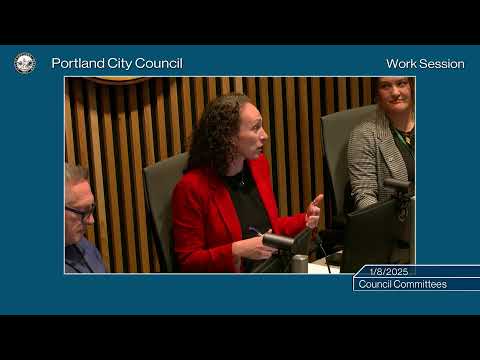
Portland City Council held a public work session Jan. 8 to discuss a proposed committee structure the council president says flows from recent charter reforms and is intended to organize policy and oversight work for the new council.
Portland City Council held a public work session Jan. 8 to discuss a proposed committee structure the council president says flows from recent charter reforms and is intended to organize policy and oversight work for the new council.
The council president said, “the goal that I have as your council president is to bring forward a list of committee appointments, membership on committees, to our next council meeting, which is next Wednesday.” That list, she said, may be added as a late item to the Jan. 15 agenda if nine councilors agree to add it.
Council members broadly agreed on the importance of standing committees but diverged on how many and how quickly to start them. Councilor Clark warned of limited staffing, saying, “We we only have really 2 policy analysts, technically, and you've given us, 9 committees, 1 being temporary.” Several colleagues recommended phasing some committees in, varying meeting frequency by workload, or keeping some functions together so staff capacity is not immediately overstretched.
Discussion centered on three recurring trade-offs: having more committees reduces the volume of issues each must cover but increases council and staff workload and scheduling complexity; having fewer committees concentrates topics and can slow response to emerging issues; and aligning committees by policy questions — as the president proposed — can differ from aligning by existing bureau service areas.
Councilors proposed several concrete adjustments or alternatives. Councilor Smith suggested a structure modeled on bureau service areas (budget and finance; city operations; community and economic development; community and public safety; parks and recreation; public works). Councilor Zimmerman and others recommended that not all committees need the same meeting frequency and that chairs should set a committee’s cadence based on workload. Multiple councilors urged that temporary transition oversight be folded into a governance or oversight committee.
Several members pressed for clarity on committee size, leadership, and quorum. The president said she envisioned most committees having four to six members and that committees could have a chair and vice chair or co-chairs, depending on need. Councilor Knoell said she “tend[s] to lean towards getting it right over doing it fast if we need to,” urging care in final design before rushing to a vote.
City staff and council operations were a frequent focus. Multiple councilors asked for a discussion about augmenting council support functions similar to legislative fiscal, research, and counsel offices found at state legislatures. Laurie Brocker was named by one speaker as having assisted drafting and wordsmithing the proposal. Councilors emphasized that limited committee staff will affect how frequently committees can meet and how deeply they can do policy work.
Robert Taylor, a city staff member brought forward to explain meeting and quorum rules, cautioned about creating committees that include a quorum of the full council. When asked whether a committee with seven or more members could produce council-level decisions without full council scrutiny, Taylor agreed with the concern, saying, “You have stated very well the concern that underlies that, yes.”
Other substantive topic threads included whether to group public safety with livability or with public health, where parks and recreation should sit relative to infrastructure and climate work, and whether the council should form a standing body to set policy direction for large funds referenced in the conversation. Councilor Novick urged a dedicated role for climate and land use oversight tied to spending of a large clean-energy tax fund, while others argued that climate and equity considerations should cut across multiple committees.
No formal votes were taken at the work session. The council president closed the meeting by reiterating that she intends to circulate a committee-membership proposal and will seek signatures to add it as a late item to the Jan. 15 council meeting agenda.
Next steps: the president will circulate a draft membership list to be considered Jan. 15; councilors asked for additional time to refine scope, staffing implications, meeting cadence, and language (committee names and descriptions) before formal adoption.