Get Full Government Meeting Transcripts, Videos, & Alerts Forever!
Get email alerts on the Finance topic
No spam. Unsubscribe anytime.
Advocates and lawyers press lawmakers on ‘VIP host’ practices and industry marketing that they say amplify addiction
Summary
Advocates, an attorney who litigated against operators, and other witnesses told the Minnesota Senate Finance Committee that operator marketing, VIP host programs and short‑term incentives contribute to problem gambling and limit legal accountability.
Advocates, a litigation attorney and addiction specialists told the Minnesota Senate Finance Committee on May 20 that betting operators’ VIP programs, marketing and incentive structures actively encourage repeat play and worsen gambling harm.
Les Brunell, national director of Stop Predatory Gambling, described “the big con” in industry narratives and said operators blur entertainment and financial exchange to normalize losses. Brunell told the committee, “Predatory gambling is when powerful gambling corporations partner with state governments to use commercialized gambling… Gambling being run as a business for profit” (citation: transcript).
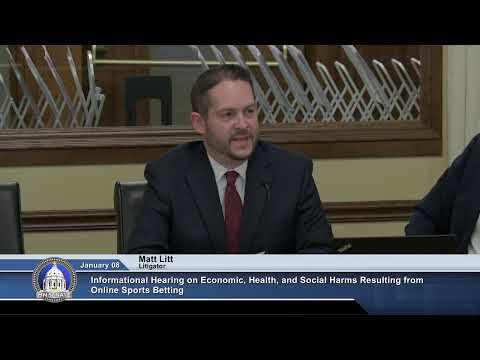
Attorney Matthew Litt outlined litigation and evidence he has collected alleging that VIP hosts and operator incentives target heavy‑deposit players and feed problem gambling. Litt said VIP hosts routinely use real‑time text messages and free‑bet credits to keep customers wagering; he described a case in which a VIP host provided “over $1,000,000 in FanDuel credits” to a single player (citation: transcript). He said operators’ “responsible gambling” scripts—asking a flagged customer “are you gambling within your means?”—are ineffective when used as a gatekeeping question rather than an intervention.
Professor Scott Baker and others testified about advertising and in‑game normalization. Baker described social and in‑game promotion that frames bets as part of the sporting experience and cited operator features — loyalty tiers, trophies and social feeds — that “normalize” betting behavior and encourage repeat, persistent deposits.
Witnesses also disputed industry claims that legalization reduces illegal offshore wagering. Brunell cited a Massachusetts Gambling Commission study he said showed illegal‑site use rose after legalization in that state; he characterized industry arguments that legalization would suppress illegal markets as a “phony narrative” (citation: transcript).
Why this matters: Minnesota lawmakers considering legalization must choose regulatory boundaries — including whether to permit mobile betting, what consumer protections to require, and what limits (if any) to place on operator loyalty and VIP programs. Several witnesses urged statutory limits or liability standards analogous to dram‑shop laws for alcohol, so operators might face legal responsibility for affirmative acts that exploit visibly addicted customers.
No formal votes occurred during the hearing.