Get Full Government Meeting Transcripts, Videos, & Alerts Forever!
Get email alerts on the Port Operations And Land Use topic
No spam. Unsubscribe anytime.
City attorney summarizes decades of Port Huenemeand Oxnard Harbor District agreements; council seeks clarifications
Summary
City staff reviewed a decades-long set of agreements linking the City of Port Hueneme and the Oxnard Harbor District Jan. 6, prompting council requests for records and clarifications about revenue formulas, vehicle "convoy" fees and the administration of a Community Benefit Fund.
City staff and the city attorney presented a multi-decade synopsis Jan. 6 of agreements between the City of Port Hueneme and the Oxnard Harbor District, covering agreements executed in 1983, 1987, and 1995 (the NCELL memorandum of understanding), as well as a 2015 settlement and later amendments.
The presentation aimed to educate the council and the public about how those agreements allocate responsibilities, payment formulas, vehicle convoy fees and land-use provisions tied to port expansion. The session prompted extensive council questions and public comment about port growth, marine and air emissions, counting and invoicing of vehicle "convoys," and where specific revenues and community benefit funds have been spent over time.
Key points from staff presentation
- 1983 agreement: imposed a payment obligation tied to a percentage of port gross operating revenues (contract text references a monthly payment of 0.278% of gross operating revenues), directed city infrastructure work (road reconstruction, maintenance) and required annual reporting. The term was later amended and now aligns with other agreements that expire in March 2036. - 1987 agreement: added a revenue share of 1.6% of gross operating revenues for certain impacts and created an automobile convoy fee starting at $1 per vehicle in 1993 that increases over time; the agreement sets annual cargo and vehicle thresholds and requires additional studies or mitigation if those thresholds are exceeded. - 1995 NCELL MOU: addressed a no-cost transfer of former Navy property (NCELL), dividing the property into parcels A, B and C with different management responsibilities and added additional fixed and variable payments, base-phase payments and a premium on automobile convoy fees for activity above 50,000 vehicles per year. - 2015 settlement agreement: followed disputes over underreporting of gross operating revenues and clarified revenue sharing, gave the port primary control of Parcels A and B and established a Community Benefit Fund (CBF), including a $100,000 annual contribution with CPI adjustments for years when gross operating revenues exceed specified thresholds.
Council questions and public comments
Councilmembers asked for documentary evidence and formula provenance for specific terms (for example, how the 0.278% figure was derived and how the term "convoy" is defined and counted). Staff told council some historical records predate current computer systems and that both agencies had not consistently followed all reporting steps called for in older agreements.
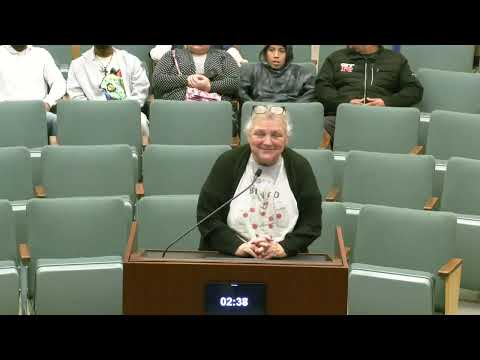
Public commenters, including Port of Hueneme Chief Financial Officer Austin Yang and local residents, raised environmental and quality-of-life concerns tied to the Port's 10-year strategic plan and asked for clearer public engagement. Yang provided a reconciliation perspective, saying annualized percentages equate to specific annual revenue-shares and saying the Port has delivered substantial payments historically.
Council direction and next steps
Councilmembers repeatedly asked staff to research and return with clarifications, including: - Historical supporting documents showing how payment percentages were calculated, - Detailed explanation of how vehicle convoys have been counted and invoiced (rail vs. vehicles on city streets vs. cars transported on auto carriers), - Accounting of Community Benefit Fund projects and past uses of port payments to the city, and - Whether the city and port can and should simplify ongoing documents and come to updated, clearer agreements or a joint public meeting between city and port leadership.
Public response
Residents and community groups pressed the council to review the Port's 10-year strategic plan and to request public presentations on emission reduction measures, green-energy projects and expected growth projections. Several public speakers asked the council to schedule a joint discussion with port commissioners and to ensure transparency about future port operations.
Ending
Staff said they will catalog the council's questions, pursue the historical records that exist, seek clarifications from the Oxnard Harbor District and return to council with a report and recommended next steps. Councilmembers voiced support for a follow-up that would present source documents and potential simplification options for the agreements.