Lifetime Citizen Portal Access — AI Briefings, Alerts & Unlimited Follows
Goodhue County investigator details use of genetic genealogy to solve 1999 Red Wing infant deaths
Loading...
Summary
Chief Deputy John Haneke described how Goodhue County and partners used genetic genealogy, traditional investigation and a DNA warrant to identify and arrest Jennifer Matter in connection with newborn deaths in 1999 and 2003; Matter was arrested May 9, 2022, and later sentenced to 27 years in prison in April 2023.
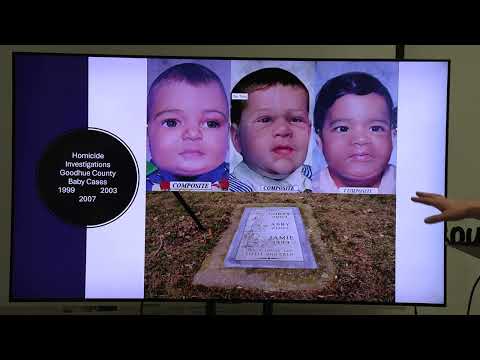
Chief Deputy John Haneke of the Goodhue County Sheriff’s Office described Tuesday how investigators paired traditional detective work with genetic genealogy to solve a long-running cold case involving newborns found in the Mississippi River near Red Wing.
Haneke said the office, with help from the Minnesota Bureau of Criminal Apprehension and a private lab, used genealogical DNA matches and conventional investigative steps to identify and arrest Jennifer Matter in May 2022 in connection with infants recovered in 1999 and 2003. Matter was later sentenced in April 2023 to 27 years in prison, Haneke said.
The presentation focused on why homicide investigations demand intensive, painstaking work — and why cold cases sometimes require new technology and community support. “We still don't have that [TV] technology,” Haneke said, adding that investigators rely on “laptops, pen and paper” and partner agencies for labor and lab work.
Haneke described the sequence in this investigation: initial forensic work and public appeals in the years after the 1999 discovery; renewed analysis using genetic genealogy beginning in late 2020; public fundraising for testing through a “justice drive” that raised about $10,000; successive genealogical leads and family-tree research in 2021 and 2022; and ultimately DNA comparison and a court-ordered sample that linked Matter to the 1999 and 2003 cases.
He explained genetic genealogy in plain terms: matches are measured in centimorgans, which indicate degrees of relatedness, and analysts build family trees from distant matches to narrow possible candidates. Haneke said that process led investigators through numerous possible relatives, international research and coordination with outside agencies and volunteers before producing a suspect.
Haneke praised Minnesota BCA agents and a Parabon-affiliated genealogy process for producing leads but emphasized the human work required to verify them: interviewing witnesses, checking memories and seeking corroborating records. He said investigators obtained a warrant signed by a judge to collect Matter’s DNA in April 2022; rapid testing returned strong statistical support within days, and investigators planned their interview and arrest strategy around that evidence and guidance from behavioral analysts.
Haneke described the interview strategy used by investigators, including use of a female BCA agent recommended for empathic interviewing, and said they sought a confession to establish facts about whether infants were born alive — evidence Haneke said would strengthen prosecutable charges. He said the team delayed immediate arrest to allow the suspect to be with family before the formal arrest on May 9, 2022.
Haneke repeatedly cautioned that genealogical leads are probabilistic and require corroboration: “It doesn't mean it is,” he said of tentative genealogy matches, and he described the investigation as an elimination process built on both DNA and conventional records. He noted the case’s unusual challenges, including pandemic-related changes to social patterns that complicated abandoned-DNA collection and the long historical reach of required family-tree research.
The presentation also reviewed broader investigative practice: the role of medical examiners in determining cause and manner of death, how digital evidence can both implicate and exonerate people, and the limits of local resources that prompt reliance on state and federal partners. Haneke said the case drew community attention over decades, including media specials and a local gravestone campaign that kept the infants’ deaths in public view.
Haneke concluded by stressing that investigators gather facts for the courts and juries, not to decide sentences: “I’m not the judge or the jury. We’re the finders of facts,” he said, summarizing the investigative outcome and the subsequent judicial sentence.