Get Full Government Meeting Transcripts, Videos, & Alerts Forever!
Get email alerts on the Scott Shasta Emergency Regulation topic
No spam. Unsubscribe anytime.
State Water Board readopts emergency regulation for Scott and Shasta watersheds; votes unanimously
Summary
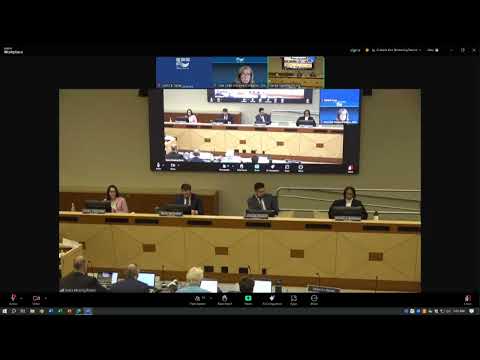
The State Water Resources Control Board voted unanimously Jan. 5 to readopt an emergency regulation to preserve minimum instream flows in the Scott and Shasta River watersheds amid ongoing concerns about fishery health.
The State Water Resources Control Board voted unanimously Jan. 5 to readopt an emergency regulation meant to preserve minimum instream flows in the Scott and Shasta River watersheds as fisheries recovery and longer-term regulatory work continues.
Board Chair Joaquin Esquivel said the regulation and the changes before the board reflect an iterative approach to a fraught situation: “I appreciated the balanced approach that I know we've attempted to take and ultimately the flexibility that's been built into this version of the emergency reg, which again, we're trying to iterate here, continue to learn together collectively,” he said during discussion.
Why it matters: staff and fisheries scientists told the board that the Scott and Shasta watersheds remain at risk for low summer flows that harm salmon and other fish even after wetter winter conditions. The emergency regulation preserves minimum flow requirements, maintains staff curtailment authority, and keeps in place a local cooperative solutions program that allows for measured, limited alternatives to curtailment if the California Department of Fish and Wildlife (CDFW) determines the proposal is “equal or better” for fisheries.
What staff told the board: Philip Dutton, a supervising engineer in the Division of Water Rights, summarized the background and outreach that produced the draft readoption and explained the board’s authority under Water Code section 1058.5 to adopt emergency regulations to address drought emergencies. He said staff sought public input and received comments in November and December 2024, and that the readopted regulation reflects those comments and staff recommendations.
CDFW perspective: Crystal Robinson, Klamath Watershed Program supervisor for the Department of Fish and Wildlife, reviewed fish counts and habitat conditions and reiterated the agency’s scientific basis for minimum flows. “We currently have 599 Chinook salmon through the Scott,” she reported (preliminary estimate), and described monitoring that shows migration timing and thermal conditions have shifted following recent Klamath dam removals.
Key technical notes: staff told the board the Jan. 5 instantaneous flows at compliance gauges were well above minimums at the time of the meeting (USGS Fort Jones on the Scott: 2,390 cubic feet per second; USGS Yreka on the Shasta: 393 cfs). Staff cautioned that midwinter high flows and a robust snowpack do not guarantee adequate summer flows and that summer 2025 conditions will depend on April–May snowpack and the seasonal progression.
Changes in this readoption: the package adopted by the board with change sheet No. 1 keeps the existing minimums and curtailment framework but adds several clarifications and limited flexibilities: metering options for groundwater wells participating in local cooperative solutions (metering at point of application is allowed), weekly rather than daily reporting for some metered groundwater uses, clearer inspection notice language, removal of outdated penalty amounts, and a provision allowing CDFW to propose alternative flow tests in parts of the Shasta River for limited terms to evaluate fishery responses. The change sheet also amended a two‑week cap so that alternative flow tests can be for a limited period subject to specified procedures rather than strictly limited to two weeks.
Public comment and disagreements: dozens of stakeholders spoke during a lengthy public comment period. Supporters of readoption — including conservation groups, tribal representatives and commercial fishers — emphasized the cultural and economic consequences of continued low runs and urged continuation of protections. Angelina Cook of the California Sportfishing Protection Alliance said economic losses from lost fisheries have been severe and urged the board to include those losses in fiscal work. Several fisheries-focused speakers and NOAA Fisheries staff warned that coho salmon are especially vulnerable and that minimum flows protect migration, rearing and thermal refuge.
Agricultural groups and local irrigators urged caution, questioning whether the emergency authority is appropriate in a year with better hydrology and asking for more complete economic analysis and procedural safeguards. Jeff Eisenberg and Ryan Walker, speaking for Siskiyou County Farm Bureau, and Alex Behring for the California Farm Bureau, asked the board to prioritize permanent rules and expressed concerns about repeated annual readoptions. Commenters raised concerns about the potential for local cooperative solutions to be used in ways that reduce transparency and urged clearer metering and enforcement.
Board response and next steps: board members acknowledged the strain on all stakeholders and emphasized that readoption is an interim tool while the board pursues a long‑term scientific and regulatory path. The board directed staff to submit the adopted regulation and record to the Office of Administrative Law (OAL) for its 10‑day review; upon OAL approval the regulation will take effect after filing with the Secretary of State.
Vote and formal action: Board member Sean McGuire moved to adopt the resolution with change sheet No. 1; the motion passed on a roll‑call vote with all voting members present recorded as voting yes. Miss Tyler called the roll and the clerk recorded the item as adopted.
What remains open: multiple speakers and board members asked staff to pursue a more detailed economic analysis that includes benefits to fisheries, tribal communities and recreation, additional transparency on local cooperative solutions and metering data, and expanded gauging and monitoring at tributary locations. The board asked staff to provide updates on the Shasta testing provisions and gauges in a follow-up informational report in late spring or early summer in advance of the irrigation season.
The board’s action preserves the emergency readoption as an interim protection and sets the stage for the longer‑term scientific, economic and regulatory work the October 2024 resolution directed staff to begin.