Get Full Government Meeting Transcripts, Videos, & Alerts Forever!
Get email alerts on the Culture Heritage topic
No spam. Unsubscribe anytime.
Mound House advisory group urges town to explore repairs to underground Calusa exhibit
Summary
Cultural and Environmental Learning Center (CellCab) and Friends of the Mound House asked the council to pursue engineering and funding options, including FEMA, to repair an underground Calusa exhibit damaged by recent storm surge and hurricane Milton.
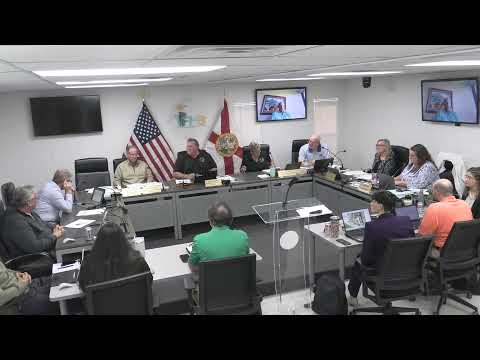
The town’s Cultural and Environmental Learning Center (CellCab) and volunteers from the Friends of the Mound House asked the Town Council on Jan. 8 to direct staff to explore options to repair and reopen the underground Calusa exhibit "Stories Beneath Our Feet," which staff has recommended close permanently because of repeated flood damage and sustainability concerns.
Barbara Hill, chair of CellCab, told council the exhibit — originally a town-supported $1 million project designed to accept some tidal surge — has suffered additional storm and surge damage since hurricane Milton and remains closed. Museum staff had recommended retiring the exhibit and not pursuing the substantial repairs needed, saying sustainability and recurring flooding make restoration impractical.
CellCab voted unanimously in November to recommend that council and staff investigate every feasible repair option and funding source before making a permanent closure decision. Several council members, including Vice Mayor Aderhold and Councilor King, told the group they supported further study and noted potential FEMA or other grant assistance and the museum’s role in preserving local cultural resources.
Technical concerns raised at the meeting included repeated flooding via an open pit and erosion of shell features in the exhibit, failure of sump pumps during prolonged inundation, and potential structural instability. Staff and Mound House volunteers said they had arranged an engineering review to assess whether the structure can be stabilized and to estimate rehabilitation costs.
Council members directed staff to include the exhibit in broader resilience and grant discussions, and to consult with engineers and historic preservation specialists to evaluate options and likely funding paths. The council did not take formal action to allocate funds at the Jan. 8 meeting.
The Mound House is an interpretive and archaeological site that draws local visitors and school groups; supporters emphasized its educational value and said they would work with staff on FEMA, state or private sources if repairs are feasible.
If staff finds feasible repairs, council asked for a cost/benefit estimate, identification of potential grant sources and a financing plan before committing town funds or acceptance of private fundraising commitments.