Get Full Government Meeting Transcripts, Videos, & Alerts Forever!
Get email alerts on the Land Use Environment topic
No spam. Unsubscribe anytime.
Appeals court considers scope of remand and coastal engineering request in Wellfleet conservation dispute
Summary
The panel heard argument over whether a conservation commission exceeded the scope of a superior-court remand when it accepted additional evidence and whether the commission’s decision to deny a coastal engineering structure (CES) for a post-1978 reconstruction was supported by the record.
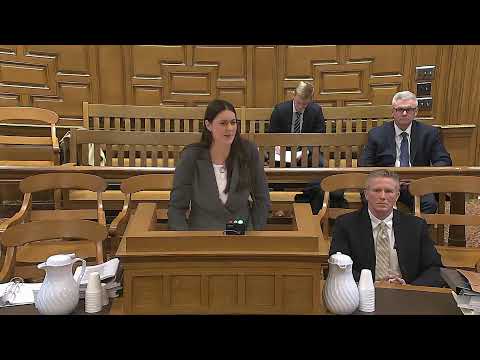
The Massachusetts Appeals Court on Jan. 8 heard argument in Hoyland View v. Town of Wellfleet Conservation Commission (Dockets 23-P-1304 and 23-P-1305) over two interrelated issues: whether a conservation commission exceeded the scope of a superior-court remand by considering new evidence at a second public hearing, and whether the commission’s denial of a coastal engineering structure (CES) was supported by substantial evidence.
Attorney Thomas Moriarty, representing the landowner/applicant, argued the trial court’s remand was limited: the commission should have reviewed the record as it stood and applied the pre-Aug. 10, 1978 analysis that would have favored approval. Moriarty said the commission effectively acted as an opponent by acquiring and relying on additional materials after the remand and that practice prejudiced the applicant.
Town counsel Devon Braun and commission counsel responded that the remand contemplated renewed public hearings and that relevant letters and technical reports (including submissions from the U.S. Department of the Interior and its consultants) were placed before the commission at the second hearing. The commission maintained it had authority to reconsider the earlier interlocutory determination and that substantial evidence supported its conclusion: coastal armoring in the proposed location would cause unacceptable harm to adjacent beaches and downstream sediment transfer.
Argument addressed statutory and regulatory contours, including 310 CMR provisions and municipal bylaw differences, the legal effect of reconstruction versus new construction after Aug. 10, 1978, and whether the commission’s second decision properly evaluated alternatives. Counsel also debated the practical consequence of remand procedures and whether the commission’s later use of outside technical material created reversible legal error.
The panel heard extended questioning about the remand’s scope, the record basis for findings that a CES would cause adverse downdrift impacts, and whether final judgment and jurisdictional steps below permitted the judge on remand to reopen factual presentations. The court took the case under advisement.