Get Full Government Meeting Transcripts, Videos, & Alerts Forever!
Get email alerts on the Criminal Appeals topic
No spam. Unsubscribe anytime.
Appeals court hears challenge to jury instructions and sentencing in Morales homicide case
Summary
The Massachusetts Appeals Court heard arguments in Commonwealth v. Morales over whether jury instructions on "reasonable provocation" and the judge's refusal to reduce a murder verdict to manslaughter were legally defective; the panel took the case under advisement after oral argument.
The Massachusetts Appeals Court heard argument Jan. 8 in Commonwealth v. Morales, Docket No. 24-P-332, on whether trial jury instructions about "reasonable provocation" and the trial judge’s refusal to reduce a murder verdict to manslaughter were erroneous and whether sentencing materials outside the trial record could support post-trial relief.
The case concerns Juan Luis Morales, who was convicted after an altercation in which the decedent, Lee Daniels, approached Morales and allegedly threatened to kill him. Defense counsel John Ramer argued the jury instruction that "mere words do not ordinarily by themselves constitute reasonable provocation" left jurors without guidance on when a death threat could qualify as adequate provocation, citing Commonwealth v. Little and related authority to say context matters. Ramer told the panel the video shows about 16 seconds elapsed between Daniels exiting his car and the struggle, and he argued the instruction’s subjective-capacity language—requiring that provocation render the defendant "incapable of reflection or restraint"—set an impossibly high standard for defendants to meet.
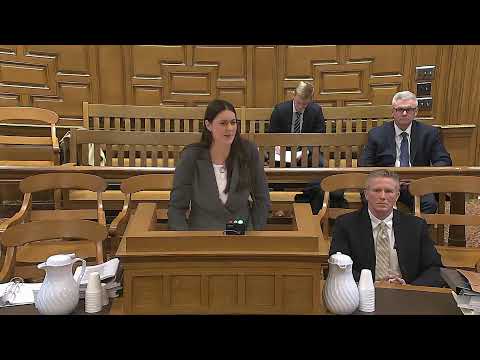
Assistant District Attorney Jesse Crane, arguing for the Commonwealth, told the panel the trial judge largely followed the model jury instructions and that the instruction permitted jurors to consider threats alongside other theories submitted to the jury, including sudden combat and claims of excessive force in self-defense or defense of another. Crane also argued the defense suffered no prejudice because the defendant received the challenged instruction and because other instructions and evidence limited any risk of a miscarriage of justice.
The panel's questioning ranged over the proper legal test for provocation, how jurors interpret "ordinarily," and whether the aid-in-sentencing letter offered after trial could justify reducing a murder conviction on a 25(b)(2)-type motion. The defense acknowledged the argument about sentencing materials was the "weakest" of its claims but asked the court to consider modern doctrines recognizing the lesser culpability of emerging adults. The Commonwealth responded that an aid-in-sentencing report introduced only at sentencing, and not presented under cross-examination at trial, is hearsay for purposes of a post-trial reduction and the trial judge did not abuse discretion.
The court took the case under advisement after both sides rested their oral argument and asked procedural and record-focused questions meant to clarify the trial record and the scope of the legal standards at issue. The panel indicated no immediate decision; the case was submitted for decision at the close of argument.
Procedural next steps: the panel will issue a written opinion resolving whether the instruction and the trial judge’s refusal to reduce the verdict were reversible error and whether extraneous sentencing materials may support relief.