Get Full Government Meeting Transcripts, Videos, & Alerts Forever!
Get email alerts on the Land Use Traffic Standing topic
No spam. Unsubscribe anytime.
Planning board special‑permit appeal turns on standing and disputed traffic expert reports
Summary
The Appeals Court heard Jan. 6 argument in Klein et al. v. Universal Property Management over a Framingham Planning Board special permit for a Route 9 commercial use, focusing on standing and whether competing traffic experts created material factual disputes.
The Massachusetts Appeals Court heard arguments Jan. 6 in Klein et al. v. Universal Property Management over a Planning Board decision to grant special permits for a Route 9 commercial development. Appellants — nearby homeowners — argued the superior court erred by granting summary judgment to the board and developer, overlooking disputed expert traffic testimony and misapplying standing rules under G.L. c. 40A.
Why it matters: The dispute pits neighborhood safety concerns — whether drive‑through and car‑wash traffic will force customers to make unsafe right turns onto a narrow residential street — against a planning board’s authority to permit commercial uses in an existing business district. The court’s handling of standing and the standard for admitting and crediting traffic analyses could affect how future land‑use appeals proceed.
Appellants’ argument
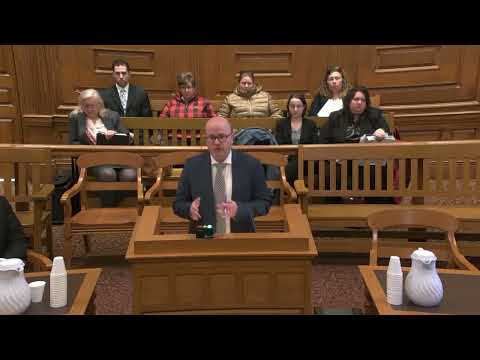
Benjamin Timon, counsel for the appellants, told the panel the superior court misplaced the initial burden: abutters enjoy a rebuttable presumption of standing and the trial court improperly required plaintiffs to prove their status before considering the board’s evidence. Timon said his clients presented expert traffic testimony from Ranger Engineering showing turning movements that would permit large passenger cars and SUVs to execute a right turn out of the site; he argued the developer’s traffic mitigation (curbing and signage) would not prevent some drivers from entering the opposing lane on Curve Street and creating a crash hazard, and that the superior court ignored disputed material facts when it granted summary judgment.
Board and developer defenses
Counsel for the Planning Board and private defendants said the board considered mitigation and that the property lies in a business district where automotive uses are permitted. The board’s counsel noted the record included engineering reports and curbing designed to steer traffic to Route 9, and argued plaintiffs had not produced evidence of a legally cognizable, particularized harm. Developer counsel added that the plaintiffs’ traffic expert had not followed standard traffic‑study procedures, had not visited the site, and offered speculative testimony about how many drivers would violate signage.
Panel themes
Judges queried whether the disputed traffic affidavits were sufficiently probative to defeat summary judgment or whether the board’s discretionary decision — granted after a public process — fell within the board’s authority and should be affirmed. The panel also asked whether an abutter must show a particularized injury distinct from other nearby residents to satisfy standing and whether the superior court had conducted the de novo factual review it is required to perform on the merits of a 40A appeal.
Outcome
No ruling was announced. The panel took the case under advisement; a written decision will address whether the superior court correctly resolved standing and whether genuine disputes of material fact about traffic required a trial rather than summary judgment.