Get Full Government Meeting Transcripts, Videos, & Alerts Forever!
Get email alerts on the Civil Commitment Evidence Static99r topic
No spam. Unsubscribe anytime.
Appeals court hears challenge to static‑99R evidence and instructions in LaSalle civil‑commitment trial
Summary
A petitioner in a Section 9 proceeding argued the judge admitted expert testimony—risk categories and recidivism percentages tied to the Static‑99R—improperly and gave confusing jury instructions; the Commonwealth defended the evidence under settled precedent and argued the petitioner’s subsequent adjudication made discharge impossible.
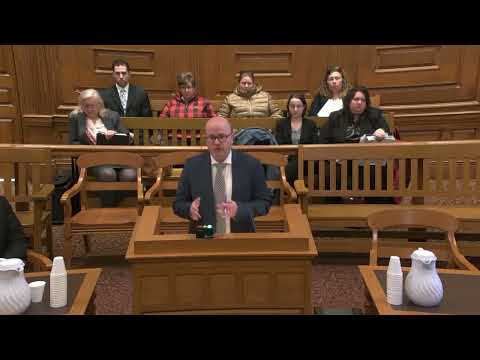
The Massachusetts Appeals Court convened Jan. 6 to hear argument in LaSalle v. Commonwealth, a Section 9 civil‑commitment appeal that focused on the admissibility of Static‑99R risk scores and accompanying recidivism percentages, the clarity of jury instructions, and whether a petitioner’s subsequent adjudication affected available relief.
Why it matters: Section 9 proceedings determine whether someone adjudicated previously as a sexually dangerous person remains so. LaSalle’s appeal presses whether statistical risk evidence and related numerical recidivism estimates should be admitted and whether the court’s instructions gave jurors a proper way to evaluate mental condition and future dangerousness.
What the petitioner argued
Laura Krismer, counsel for petitioner Joseph LaSalle, asked the court to revisit how judges admit and explain Static‑99R evidence — the instrument’s new category labels and five‑, 10‑ and 20‑year recidivism percentages — and argued that the expert testimony in LaSalle’s case improperly presented the statistics as if they were individualized to LaSalle. Krismer urged a Daubert/Lanigan‑style reliability analysis, saying the record showed inconsistent percentages and that some testimony suggested an increasing risk over time (contrary to literature showing desistance). Krismer also attacked jury instructions as “convoluted,” saying the statutory framework requires clearer linkage between mental condition, a qualified examiner’s opinion, and the jurors’ required findings. Krismer pressed that the judge’s admission of testimony about the Community Access Program (CAP) raised due‑process questions because the record showed the program had not admitted participants for decades.
What the Commonwealth argued
Mary Murray, arguing for the Commonwealth, told the court that George (an SJC decision addressing the Static‑99R) permits admission of the score and associated statistics and that trial practices do not require a Daubert hearing on each update to research. The Commonwealth argued the Static‑99R was one tool among several — the jury also heard qualified examiners and dynamic factors — and that LaSalle’s subsequent findings and retrials meant the court could not grant the discharge relief petitioner sought. The Commonwealth also said the CAP evidence did not establish a constitutional violation and that challenge would require a fuller factual record.
Panel concerns and procedural posture
The panel questioned whether an evidentiary hearing on the new Static‑99R output would be necessary in future cases and whether the trial judge had properly explained the tool’s limits to jurors. Judges asked whether the percentage tables suggested rising risk over longer time horizons and probed why the Static‑99R numbers sometimes were inconsistent in testimony. They also queried the practical consequences of ruling for the petitioner given LaSalle’s subsequent adjudication and whether that procedural posture rendered relief moot.
Outcome
No ruling was issued from the bench. The court took the arguments under advisement; a written opinion will resolve whether the Static‑99R evidence and the jury instructions satisfied admissibility and sufficiency standards in this Section 9 case.