Get Full Government Meeting Transcripts, Videos, & Alerts Forever!
Get email alerts on the Meeting Procedures topic
No spam. Unsubscribe anytime.
Carroll County commissioners approve agenda, appoint interim clerk and enter closed session
Summary
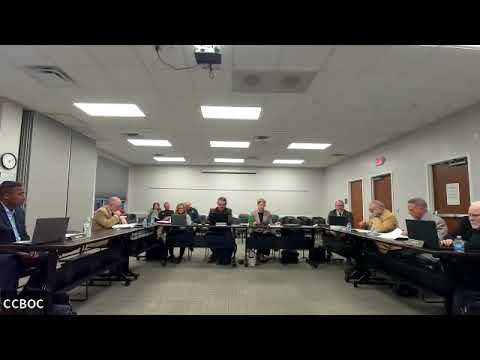
At its Jan. 6 work session the Carroll County Board of Commissioners approved the meeting agenda, appointed a temporary clerk/minute-taker and voted to enter a closed session to consult with the county attorney.
The Carroll County Board of Commissioners on Jan. 6 approved the evening agenda, appointed a temporary clerk to handle statutory clerk duties and voted to enter a closed session to consult with the county attorney.
The board approved the agenda on a voice vote after Commissioner Rand moved to approve and Commissioner Rhodes seconded the motion; the chair called for the ayes and declared the motion carried. Later the board voted to appoint Michelle Parker Evans to take minutes and serve in the clerk role while the board is without a permanent clerk. That appointment was moved by Commissioner Rose and seconded by Commissioner Ingram and passed on a voice vote. Toward the end of the meeting the board voted, on a motion moved by Commissioner Rose and seconded by Commissioner Smith, to enter closed session to consult with the county attorney under the statutory privilege the chair read into the record.
The board members framed the appointment as a temporary, limited assignment so the interim clerk would perform legally required clerk functions while the county searches for a permanent replacement. The meeting packet and remarks indicate Michelle Parker Evans — identified by staff as a former Durham County clerk who retired in 2018 and has done interim work since — will take minutes during the clerk vacancy.
The closed-session motion cited a statutory consultation with an attorney; the chair read a statutory citation into the record (as spoken in the meeting) before the vote.
No other formal votes on ordinances, budgets, or contracts were recorded during the Jan. 6 work session; several policy items were discussed for later action at the month’s regular meeting.