Get Full Government Meeting Transcripts, Videos, & Alerts Forever!
Get email alerts on the Land Use Rezoning topic
No spam. Unsubscribe anytime.
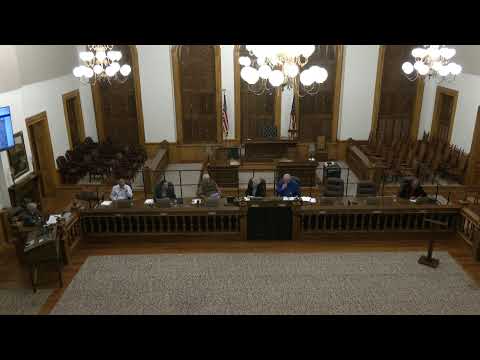
Commission narrowly approves Green Valley Farms rezoning after extended public hearing
Summary
After a lengthy public hearing with multiple neighbors raising concerns about traffic, runoff and rural character, the county commission approved rezoning of 52.794 acres for a 47-lot R-1 OSC subdivision with several conditions including increased minimum house sizes and buffer plantings.
Walton County commissioners voted to approve a rezoning request for a 52.794-acre parcel on Alcovy Station Road after an extended public hearing that drew several nearby residents who opposed the plan.
Andrea Gray, representing Alcovey Development Group, asked the board to rezone the parcel from A-1 to R-1 OSC for a conservation-focused development called Green Valley Farms. Gray said the project would create 47 lots, provide 25% open space, include curb-and-gutter streets, underground utilities and minimum home sizes above county code. She said K&M Homebuilders, a local firm, would build houses with materials such as cement-fiber siding, brick and stone and that evergreen plantings would be added along the western boundary to buffer neighboring properties.
Opposition from neighbors: Several nearby residents told the commission they opposed the rezoning for reasons that included loss of rural character, potential impacts to surface and groundwater, septic and well concerns, traffic and a belief that the development was out of character with the area’s two-acre lots. One resident, Steve Covert, said the area’s prevailing pattern is two- to two-and-a-quarter-acre lots and described the rezoning as “out of character.” Another resident who lives immediately downgradient from the site raised concerns about runoff and groundwater that flows into Flat Creek and said his property supports cattle operations that could generate future neighbor complaints if more residential neighbors move in. Alicia Warlock, a nearby resident who coordinated neighborhood comment, argued the developer had purchased land without contingency and urged commissioners to hold the developer accountable; she and others urged the commission to require larger lots or deny the rezoning.
Planning commission and conditions: The county’s planning commission recommended approval with conditions. Planning staff read 13 conditions into the record, including evergreen plantings along the western property line, 25% open space, mandatory homeowners association (HOA) governance with architectural review, minimum square footages (single-story minimum 2,200 sq. ft.; two-story minimum 2,400 sq. ft.), curb and gutter, and a maximum of 47 lots. During discussion the commission clarified that many of the proposed conditions restate existing code; the board voted to keep three site-specific conditions (evergreen plantings, the increased minimum square footage, and architectural shingles) and remove the redundant conditions that already exist in county ordinance.
Vote and outcome: After discussion, the board approved the rezoning on a recorded vote described in the meeting as 4-to-1 in favor. The approval carries the modified set of conditions the board adopted at the meeting.
What’s next: The developer will need to comply with county permitting requirements, erosion-control and sedimentation laws and HOA formation requirements. Neighbors said they will continue to monitor the project; the developer said it will follow state and county permitting procedures, including soil-erosion and sedimentation controls and required health-department septic approvals, during site design and permitting.
The public hearing on the rezoning was lengthy and included multiple speakers on both sides; the board explicitly preserved the county’s administrative variance and appeals processes as part of the record.