
Norwood reports healthy first‑quarter finances; circuit breaker and grants cited as cushions
Get AI-powered insights, summaries, and transcripts
Subscribe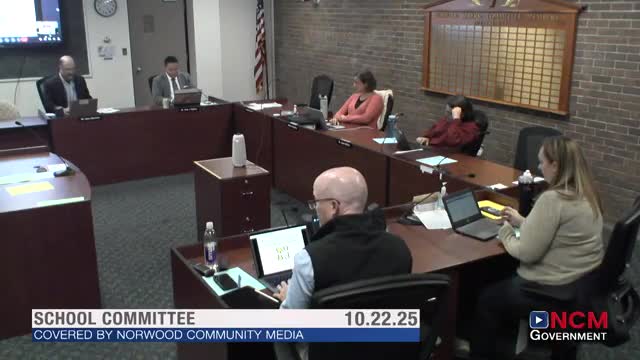
Summary
District finance staff reported a preliminary FY26 first‑quarter position: a $65.29 million budget with roughly 12% spent, an $850,000 unspent balance at quarter close, rising circuit breaker reimbursement and multiple grants that help offset special‑education costs.
At the Town of Norwood School Committee meeting, district finance staff presented a first‑quarter fiscal update for FY26 and an overview of grant funding that officials said should help stabilize special‑education costs.
Sean Mannion, a district finance official, told the committee the FY26 operating budget is $65,292,117 and that the district had spent roughly 12% (just under $8 million) through the first quarter (July–September). Encumbrances and payroll commitments mean most of the budget appears committed on paper; the district reported an available balance of about $850,000 at quarter close.
Mannion said the district built FY26 assuming a $550,000 use of the Special Education reserve but that staff expect to recommend shifting that dependency onto circuit breaker funding so the reserve can remain intact as a contingency. The circuit breaker — Massachusetts’ special‑education reimbursement mechanism — was reported at roughly $5.332 million for the district, and Mannion said projected circuit‑breaker receipts and other offsets leave the district in a “good financial standing” at first quarter.
Tuition and out‑of‑district placements were reported below the budgeted total: placements (an accounting line that tracks actual placements over a school year) stood at 80 against a budgeted count of 82 and a budgeted tuition exposure of $11.5 million; projected reimbursements and grant offsets reduce the operating‑budget impact. Mannion noted that out‑of‑district placement counts fluctuate through the year and cautioned that spring placement increases can raise costs after the fall snapshot.
The committee also heard an overview of federal and state grants. Notable items include the IDEA grant (reported in the meeting as “IDEA 240”), a large special‑education entitlement that funds related services; the district also expects Prism grant funding of about $723,000 for MTSS and literacy work and reported other federal entitlements (Title I, Title II, Title III and Title IV). Mannion said the district received authorization for federal and state grants covering FY26 and that potential federal reductions in future budgets (Title I/II/IV) are a planning concern for FY27.
Transportation was highlighted as a cost center and operational challenge. The district operates 39 vans and seven buses with little in spare capacity, has added three large buses to reduce overcrowding at some levels and is still recruiting CDL drivers and substitutes. Mannion said transportation counts historically rise through the year (for example, the district ended the prior year at about 319 special‑services riders) and that vendor outsourcing is sometimes necessary for long‑distance routes.
Mannion told the committee the district’s revolving accounts and reserves appear healthy: the special‑education reserve was described as roughly $1 million after a prior transfer and warrant articles, and the district projects a healthy circuit‑breaker reserve going into the rest of the fiscal year.
Committee members asked about potential impacts from a federal government shutdown on school nutrition reimbursements. Mannion said reimbursements were expected through October and noted the district has a healthy school‑nutrition revolving balance that could bridge short delays; he recommended the budget subcommittee examine contingency options if reimbursements were interrupted.
No formal votes on budget allocations were taken in this meeting; the committee moved the FY27 budget‑priority discussion to the Nov. 5 meeting to ensure full membership participation.