Get Full Government Meeting Transcripts, Videos, & Alerts Forever!
Get email alerts on the Criminal Ineffective Assistance topic
No spam. Unsubscribe anytime.
Appeals Court hears ineffective‑assistance claim over disputed surveillance audio in paint‑can case
Summary
In Commonwealth v. Joseph Green, defense counsel argued that trial counsel’s decision to introduce a defense‑side surveillance video that contained a faint thud was manifestly unreasonable and deprived Green of a fair trial; the prosecution said the video had strategic exculpatory value and the trial judge found counsel’s choice reasonable.
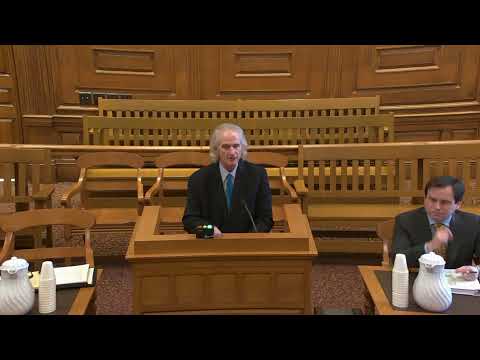
Jennifer O’Brien argued for Joseph Green that trial counsel’s tactical decision to introduce a neighborhood surveillance video—what counsel called the “Mackenzie” video—was manifestly unreasonable and was the key inculpatory exhibit that led to conviction.
O’Brien told the Appeals Court the underlying evidence, absent that video, was weak: a four‑hour window on Oct. 4, 2021, during which a white SUV drove past a driveway and a paint can was thrown. She said there was no paint on the defendant’s car, no direct video tie to the defendant driving, and only a nervous reaction when police interviewed him. O’Brien argued defense counsel did not know the audio content before offering the clip and thus made an “uninformed tactical decision.” She asked for a new trial.
Benjamin Haspel, who prosecuted the case at trial, said defense counsel’s use of the video came through cross‑examination of the victim and had demonstrable exculpatory value—letting defense argue that more than one white SUV passed and casting doubt on identity. Haspel said the trial judge (who later also considered the post‑trial motion) found the admission a reasonable strategic decision, and that the video did not conclusively prove guilt without other corroborating inferences.
The panel questioned counsel about authentication, the audio’s faintness, and whether the video could have been introduced or authenticated by the Commonwealth in any event. Haspel noted corroborating timeline and police investigation facts that, in his view, sufficed to support the conviction even without complete reliance on the Mackenzie clip.
The court heard argument but made no immediate ruling. The appeal focuses on whether counsel’s decision to introduce potentially inculpatory audio constituted ineffective assistance because it rendered the verdict unreliable.