Get Full Government Meeting Transcripts, Videos, & Alerts Forever!
Get email alerts on the School Calendars topic
No spam. Unsubscribe anytime.
New Albany-Plain Local opens 30-day public hearing on 2026–29 school calendars
Summary
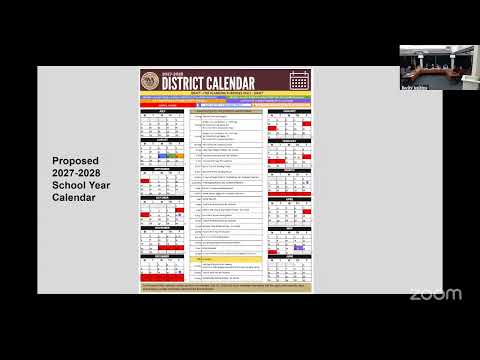
The New Albany-Plain Local Board of Education opened a 30-day public hearing Jan. 6 on draft school-year calendars for 2026–27 through 2028–29, with Superintendent Sawyers proposing only template and staggered-start order changes and outlining the public comment process.
The New Albany-Plain Local Board of Education opened a public hearing Jan. 6 to solicit input on draft school calendars for the 2026–27, 2027–28 and 2028–29 school years.
Superintendent Sawyers told the board the proposal makes no changes to key instructional dates such as the first and last day of school, spring break or winter recess; rather, it updates the calendar template and alters the order and length of the staggered start for early grades. "I'm not changing the first day of school, I'm not changing the last day of school, I'm not changing spring break, winter break," Sawyers said. "I'm just changing the order of how kids come to school and reducing the number of days related to staggered start in the school district based upon continued feedback."
The board must follow Ohio law and its own policy in adopting calendars. Sawyers cited board policy 8210 and said the Ohio Revised Code requires a minimum number of instructional hours, a threshold New Albany-Plain Local exceeds: "ORC actually requires number of hours, so we far exceed the number of hours, in our school district," Sawyers said. He also noted contractual provisions that shape the calendar, including 178 student days and a 186-day teacher work year incorporating conference and professional development days.
The administration plans to open public comment and a survey on Jan. 7; the comment period will run through Feb. 5, 2025. Sawyers said the survey will be anonymous, ask respondents to identify whether they are a student, guardian, staff member or community member, and provide open-text feedback on each draft calendar. The administration will synthesize comments and return to the board in February with a summary and recommendations.
Sawyers summarized the templates being proposed: each calendar starts in mid-August, includes built-in professional development days, Thanksgiving and two-week winter recesses in December, and standardizes spring break to the last week of March. He said the staggered-start rotation will be adjusted so that student last-name groups rotate who comes first and that the number of staggered-start days for preschool and kindergarten will be reduced to allow for mandatory testing and some summer onboarding opportunities.
Board members and Sawyers discussed reasons for an August start date, with Sawyers saying the district favors more instructional days before spring state testing. He also explained the district provides up to five "grace" calamity days; additional snow days beyond five become makeup days appended to the end of the school year as marked on each calendar.
The public-comment period and the administration's follow-up summary will precede any formal board vote on the proposed calendars.