Get Full Government Meeting Transcripts, Videos, & Alerts Forever!
Get email alerts on the Homelessness topic
No spam. Unsubscribe anytime.
Residents and commissioners press homelessness, addiction and affordable housing as top priorities
Summary
Public commenters and commissioners used the open forum to press for a local approach to homelessness, calling for treatment facilities, stricter enforcement against dealers, and clarity on affordable housing funding. Commissioners discussed constraints from state policy and local options to pilot alternative approaches.
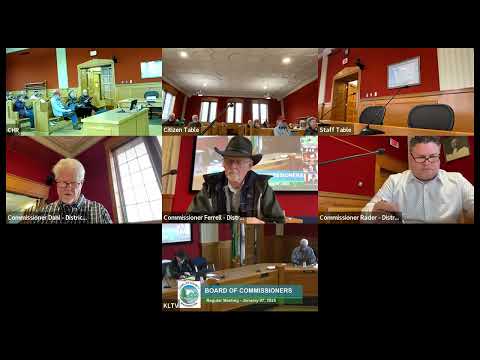
A sustained public-comment and commissioner-level discussion at the Cowlitz County Board of Commissioners’ first 2025 meeting focused on homelessness, substance abuse treatment, affordable housing funding and the role of local enforcement.
Bill Youngren, author of a county public-safety document presented last year, said he and others are building a coalition across jurisdictions to address public safety tied to homelessness and urged focus on creating treatment capacity. “The biggest part in my, my estimation, the biggest part of this whole thing is a mental health facility and starting to deal with having a place to put the people,” he said.
Residents described the difficulty families face when a relative is addicted and homeless. One commenter recounted locating a 31-year-old grandson in an unsheltered encampment in Spokane after months of uncertainty and said privately funded residential treatment programs are typically priced at roughly $1,000 per day, creating a barrier for families seeking help. Another commenter urged the board to engage the sheriff’s office more directly as a practical resource for families seeking assistance.
During the discussion, a resident noted the recording (real estate transfer) fund has been used as part of financing for affordable housing projects and asked whether the county’s contributions are the sole source for large projects. A commissioner responded that county funds typically provide only a portion; the example cited was Campus Towers, where the county contributed about $800,000 but the overall project cost was much larger, and other funding sources included federal or state grants and sometimes private funds.
A public commenter mentioned the Southwest Washington Housing Authority’s recently cited funding of over $16 million for roughly 40 units, characterizing costs that commenter described as more than $450,000 per unit. That figure was presented during public comment and not vetted or confirmed by county staff during the meeting.
Commissioners debated approaches. Commissioner Dahl said local leaders should keep the issue prominent and pursue stepwise, pragmatic solutions rather than waiting for a single master facility. Dahl criticized statewide policy choices and argued the state’s funding emphasis has prioritized shelter and homeless programs over treatment and recovery services: “We’ve made the road to stay in that condition easier than the road to get off,” he said, arguing for ways to make recovery more accessible than continued homelessness.
Commissioner Farrell and others said law enforcement, prosecutors and judges must coordinate for enforcement to be effective, and several speakers favored approaches that require commitment from people entering treatment programs (sign-in or commitment processes) rather than low-barrier shelter models where continuing substance use is allowed.
Speakers agreed the county faces constraints from state policy and funding but expressed a willingness among commissioners to explore local pilot programs and advocacy strategies. The board scheduled a Department of Ecology visit for Jan. 29 and plans to continue related policy discussions at future meetings.