Get Full Government Meeting Transcripts, Videos, & Alerts Forever!
Get email alerts on the Finance Programs topic
No spam. Unsubscribe anytime.
Council hears presentation on commercial PACE program; SRS to administer local enrollments
Summary
Officials and a third‑party administrator described Utah’s Commercial PACE (C‑PACE) program to the council, answering questions about eligibility, costs, lender consent, and protections for the city. No council vote was recorded in the transcript.
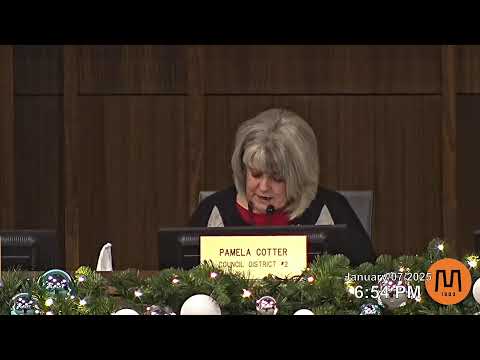
Murray City council members heard a detailed presentation Jan. 7 about the state‑enabled Commercial Property Assessed Clean Energy program (C‑PACE) and the role Sustainable Real Estate Solutions (SRS) would play as a program administrator.
The presentation: Representatives from SRS explained how C‑PACE provides long‑term, fixed‑rate financing to property owners for energy efficiency, water conservation, electric‑vehicle charging infrastructure and seismic upgrades. The program attaches a voluntary special assessment to the property; the jurisdiction (city or county) places the assessment and then assigns it to a third‑party lender at closing so the city is not responsible for collection or enforcement.
Key points explained to council: - Eligibility and scope: Utah’s statute allows C‑PACE on commercial, industrial, retail, hospitality and multifamily properties (five or more units); the program also permits a 3‑year “look back” to refinance qualifying improvements completed within that window. - Financing and lenders: SRS said more than 30 capital providers have signed up as capital sources in Utah; financing terms (rate and term) are negotiated between borrower and lender (C‑PACE loans can be up to 30 years in statute, SRS noted). - Fees and city exposure: SRS said the program finance fee is 3% of the loan and is paid by the borrower only when a transaction closes; SRS emphasized that the program has “no cost to cities or counties” and that, under state documents, the lender indemnifies the city after the assignment. - Program verification: SRS provides technical and statutory review, including engineering and building‑performance verification, to confirm projects meet program requirements before the assessment is recorded.
Questions and council concerns: Council members asked whether businesses are awaiting the city’s opt‑in; SRS cited two Murray projects in early stages and named 1 prospective applicant (identified in the presentation as Paul Dowlin, owner of Dowlin Tile and Utah Storage) whose projects were described as exceeding $1 million each. Council members asked about bankruptcy, lender consent, who handles monitoring and collection and whether the city would be left holding unpaid assessments; SRS representatives said the lender assumes collection responsibility and the transaction would not finalize if documents or lender consent are not in place.
On voluntariness: SRS repeatedly emphasized that participation is voluntary and would not change taxes, zoning or other local rules; “So it’s completely voluntary,” an SRS representative said.
Outcome: The January 7 transcript records an informational discussion and questions but does not include a recorded council vote to opt in or to approve an administrator agreement. Council members indicated interest and asked staff to coordinate with SRS if projects progress.
What to watch: If the council later adopts an opt‑in resolution, individual property owners could begin applying; SRS reported that the state has vetted model documents with the assistant attorney general and that SRS would manage processes to minimize staff burden on the city.