Get Full Government Meeting Transcripts, Videos, & Alerts Forever!
Get email alerts on the Behavioral Health Recovery topic
No spam. Unsubscribe anytime.
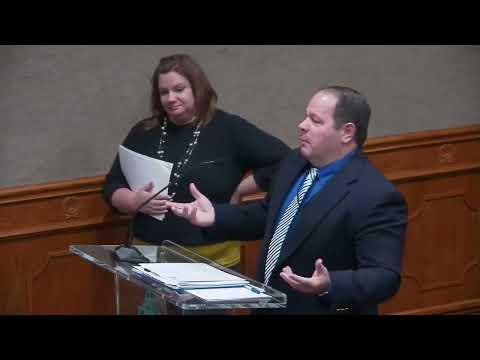
Seneca County judges ask Tiffin City Council for local funding for Pivot recovery program
Summary
Judges and program staff described the Pivot Recovery Program, asked the council to consider a city funding commitment as federal seed money ended, and outlined participant counts, program costs and partner funding sources.
Judges from Seneca County and Pivot Recovery Program staff presented an overview of the county''s specialized docket court and asked Tiffin City Council to consider a local funding commitment to sustain the program.
The presentation, given during the mayor''s report, explained that Pivot is a multi-jurisdictional specialized docket certified by the Ohio Supreme Court and the National Association of Recovery Courts (All Rise). Judges said Pivot uses a phased, court-supervised treatment model they described as taking about 15 months on average to complete and emphasized the program''s focus on housing, employment and reducing recidivism.
The judges told council members that Pivot has lost some federal SAMHSA seed grant support and is seeking local and grant funding to maintain staffing and in-house programming. "I would just like to add, any allocation of funds from the city of Tiffin would be greatly appreciated because we are always looking to make sure we have that program in place," Judge Damon Ault said. Mayor Lee Wilkinson said he had reviewed settlement projections and told council, "for the next seven years, it seems like it's going to be fairly consistent around $18,000 a year." He moved to place the item on the council agenda for the next meeting so members could review budget details.
Why it matters: Pivot provides intensive supervision and treatment for people with substance-use disorders who are in the criminal-justice system. Judges and staff said the program helps participants secure stable housing and employment and reduces future justice-system involvement; sustaining staff and local services requires ongoing operating funds even where treatment itself is billed to Medicaid.
Details and context
- Structure and timing: Pivot uses five phases (Phase 1: 60 days; Phases 2''3: 90 days each; Phase 4''5 are longer), with weekly court sessions (men at about 10:15 a.m., women at about 11:30 a.m.). Certification by the Ohio Supreme Court occurs every three years; the judges said the program's next certification date is on or before Dec. 31, 2026.
- Participants and scale: The judges said Pivot currently had 34 participants, of whom 21 had municipal court cases; of those 21, about 17 were from the city of Tiffin. Judges said the program is intentionally keeping a target caseload near 50 participants given current staffing.
- Staffing and services: Program staff include two case managers, two community support specialists, one probation officer who doubles as program coordinator, and an in-house cognitive-skills trainer. Judges explained that much direct treatment (for example inpatient stays or intensive outpatient programs) is billed to Medicaid, while the city or program covers staff and in-house groups.
- Funding sources noted: Judges said the program previously received SAMHSA grant funding (seed money) that has ended. They reported receiving a $180,000 award via a One Ohio Foundation grant and said Seneca County commissioners committed two-thirds of future opioid-settlement proceeds to Pivot through a One Ohio Foundation allocation; the judges said that commitment could extend for many years depending on settlement receipts. Judges also described coordination with Orianna House, which they said received a SAMHSA enhancement award (described in the presentation as $2,000,000 over four years) to expand mental-health services that will complement Pivot.
- Referral and admission criteria: Judges said potential participants must pass a legal screen and clinical assessment; all three rotating judges then vote and require unanimous approval for admission. The court excludes people who are actively trafficking drugs from admission to preserve the therapeutic group environment.
Council response and next steps
Council members asked how many participants come from Tiffin (judges said about 17 of the municipal-court participants). Council members asked about program budgets and the judges said a full annual budget was not yet available at the presentation but they offered to provide a copy to council at the next meeting. Mayor Wilkinson and council agreed to add a budget discussion to the agenda for the council''s upcoming meeting (noted in the presentation as Jan. 21) so members could review the program''s needs and the settlement-projection figures.
Ending
Judges and program staff invited council members and the public to observe Pivot sessions, noting weekly dockets and upcoming admissions and graduations. They said ongoing local support would help preserve the court-based treatment option now that some federal seed funds have ended.