Get Full Government Meeting Transcripts, Videos, & Alerts Forever!
Get email alerts on the Public Health Community Health Assessment topic
No spam. Unsubscribe anytime.
Kittitas County Public Health briefs Ellensburg council on CHA/CHIP priorities: access to care, behavioral health, children and families
Summary
Kittitas County Public Health presented its Community Health Assessment (CHA) and Community Health Improvement Plan (CHIP) in an Ellensburg City Council study session, highlighting the top strategic priorities, the data sources behind them and next steps for implementation and evaluation.
Kittitas County Public Health officials presented the county's Community Health Assessment (CHA) and Community Health Improvement Plan (CHIP) to the Ellensburg City Council during a study session, saying the county will focus implementation over the next five years on access to care, behavioral health and children, youth and families.
"We lovingly refer to these as the CHA and the CHIP," said Mackenzie Carter, assessment coordinator at the Kittitas County Public Health Department, who gave an overview of the process and findings. Carter said the CHA synthesizes four distinct assessments — a community survey, two focus groups, a community health status assessment and a local public health system assessment — to produce a data-driven snapshot of community health.
The community survey, conducted in October 2022, captured 423 responses and two focus groups were held: one for Upper County residents and one for Spanish speakers, Carter said. The CHA report is dated 2022; Carter said the assessment took about two years to compile and the CHIP required another year of development.
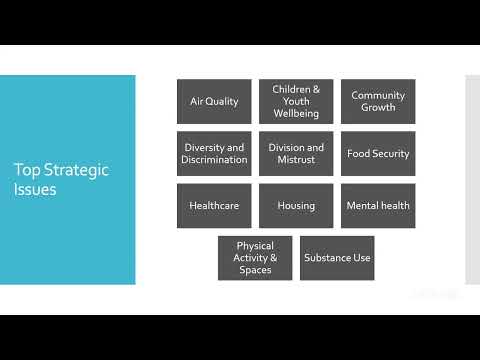
Carter summarized the prioritization process: the team identified more than 100 indicators across clinical and environmental domains, created mind maps for leading issues, and prioritized topics based on feasibility, scope of impact and the consequences of inaction. "These three issues clearly rose to the top for the committee," she said, referring to access to care, behavioral health (including mental health and substance use), and children, youth and families.
Kittitas County Health Network (KCHN) is named as the lead implementation partner for the CHIP, Carter said, and the county health department's role is to monitor and evaluate progress. The CHIP went into effect in January 2024 and, Carter said, the county is entering year two of a five-year implementation cycle. An annual evaluation report of year one data was described as planned for March or April (year not specified in the presentation).
Council members asked several implementation and data questions. One council member noted the long-standing gaps in pediatric, geriatric and behavioral health services and raised concerns about access to skilled nursing beds; the councilmember said some local residents are being transferred out of county for skilled nursing care. Carter and others said incentives and employment opportunities to increase providers are being explored through KCHN work groups but that solutions require collaboration beyond public health.
Council members asked about the representativeness of the survey. Carter said responses skewed toward Ellensburg and that the 423 responses are "not statistically significant for the county" (she said a countywide statistically significant sample would be a little over 600 respondents). Carter said the department can work with its epidemiologist to provide additional data if the council requests it.
Public health staff also discussed related initiatives. Carter said the county's "one-tenth of 1%" mental health and chemical dependency advisory board is assembled and in its third year and that awardees funded through that tax advisory process are required to report program-level indicators; those reports will provide additional data aligned with the CHIP's goals. Carter identified Erin Moore as chairing that advisory board and Leanne Bradshaw as the department epidemiologist who collaborated on the assessment.
Chelsea Leffers, director of the public health department, told council members the department recently was awarded state funding through the Washington State Department of Ecology to begin an air quality project. "Wehave been awarded funds to do the first steps of an air quality project, which will involve working with our community members to determine what they want to see for air quality activities," Leffers said. She said the project will focus on PM2.5 matters (not solely wildfire smoke) and that the department is still negotiating the contract and defining the scope of work.
Food insecurity was discussed but did not make the CHIP's top three priorities because it appeared in only two of the four assessments used for prioritization. Carter said objective indicators of food insecurity exist in the CHA and that updated data are available on request. Several speakers emphasized the value of the CHA/CHIP as a community resource and suggested the data could inform the city's comprehensive plan updates and planning department work.
No formal council actions or votes were recorded during the study session portion of the transcript; presenters asked council members for questions and indicated follow-up work and additional reporting would be available through the health department and KCHN.
The presentation and supporting documents, Carter said, are published in the CHA and CHIP on the county's website; department staff offered to provide more detailed survey breakdowns and to coordinate with the city on air-quality project planning.