Get Full Government Meeting Transcripts, Videos, & Alerts Forever!
Get email alerts on the City Hall Design topic
No spam. Unsubscribe anytime.
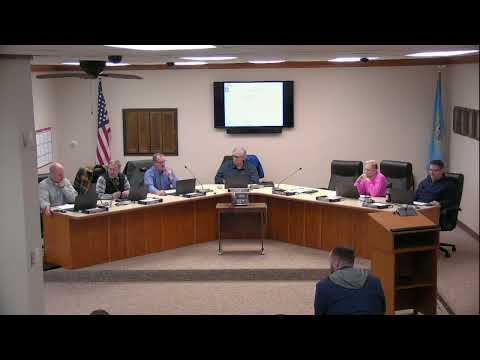
Council declines to move directly to contract for city hall design after objections over procurement
Summary
A proposal to proceed with ISG on detailed design and bid documents for a new city hall drew extended debate over prior vendor selection and public bidding; the motion to move forward failed on a roll call vote.
The City Council voted down a motion to move forward with a design-to-contract step for a proposed new city hall after several members said they wanted competitive bids or clearer documentation before committing to a single firm.
The motion before the council would have accepted a proposal from ISG to develop design and bid documents for a new city hall based on earlier planning work. Josh Muckenharn of ISG said the step would allow the city to “move forward with the design, and bid documents for the proposed floor plan that was developed this year.”
Council members pressed for more competition and transparency. One council member said residents would question awarding a roughly half-million-dollar design contract without seeing other bids and announced they would vote no if the motion were approved. Another member emphasized that ISG had been part of the project’s planning since a 2019 space-needs study and structural analyses, arguing that changing firms now would slow progress.
Council discussion recalled a multi-year planning process. City staff summarized prior work: a 2019 space-needs study that reduced an original concept from about 35,000 square feet to roughly 26,000 square feet, structural analyses of existing buildings, and earlier selection of ISG after a request for proposals. ISG representatives described prior work on the project, including supporting a CMAR (construction manager at risk) selection process conducted two summers earlier.
After additional debate about whether the city was bound to ISG and reminders that approving the proposal would lead only to a contract to be negotiated, councilmembers moved to a recorded vote. The roll call produced at least one recorded “no” vote and the mayor announced, “Okay. Motion fails.”
The failure leaves the council without immediate direction to finalize design documents or a negotiated contract with ISG. Council members discussed options going forward, including issuing a request for proposals (RFP) or asking ISG for additional documentation and cost comparisons before taking another vote.
The council did not adopt any appropriation tied to the design at this meeting; staff said that, legally, a signed contract and appropriation would be required before spending design funds. Councilmembers asked staff to return with next steps that could include seeking competing proposals or additional cost detail.
Councilmembers and staff framed the debate as balancing stewardship of public funds against the benefits of continuity with a firm already familiar with the project. Several members said they supported continuing the project but wanted more competitive pricing or clearer paperwork before committing.