Get Full Government Meeting Transcripts, Videos, & Alerts Forever!
Get email alerts on the Wildfire Policy topic
No spam. Unsubscribe anytime.
Morgan County briefed on state cooperative wildfire agreement; participating commitment jumps to about $190,646
Summary
County fire officials told commissioners an updated Cooperative Wildland Fire Agreement requires a participating-commitment pledge by Jan. 16 and offered a plan of in-kind mitigation work to meet an increase from roughly $78,000 to about $190,646.
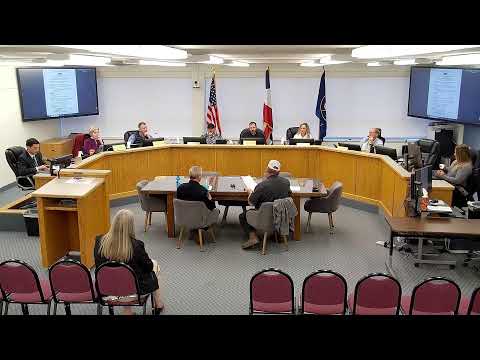
Morgan County commissioners were briefed on the county’s Cooperative Wildland Fire Agreement with the state and told the county must provide a signed participating commitment by Jan. 16 to remain covered under the program's terms. "You have to have a burn permit, period," Morgan County fire warden Dave Vickers said, describing changes to state burn rules and other program requirements.
The presentation, delivered by Vickers with Fire Chief Kerrigan in the audience, explained that the state revised its formula for assessing county wildfire risk and costs. Vickers said the county’s participating commitment rose from about $78,000 to $190,646 under the new calculation. He said the county currently has an extension letter in place while the state attorney general finalizes an updated master agreement.
The Cooperative Wildland Fire Agreement (also described in the meeting as the Cooperative Wildfire System) ties a county’s mitigation work and resource commitments to state financial support in the event of a catastrophic delegated wildland fire. Vickers told the commission the state will assume 100% of the financial responsibility for catastrophic wildland fires once a fire is delegated to the state: "If we have another $1,000,000 fire, you're not gonna have to worry about—you're gonna see a check for $1,000,000. The state's gonna take 100% of the financial responsibility," he said.
Why it matters: The revised assessment could raise the county’s annual mitigation obligation in the near term, but Vickers and county staff outlined steps to satisfy the participating commitment through in-kind projects and equipment purchases rather than by writing a single large check. Vickers said that option—paying the full assessed amount in cash—remains available but is likely not what county leaders will choose.
Key details from the briefing: - Requirements and coverage: To participate, counties must maintain a community wildfire protection plan, adopt a wildland-urban-interface code, ensure minimum wildland training for firefighters ("red card" training), and have a recognized fire warden. Vickers identified himself as the county’s fire warden and said the county pays 50% of his expenses under the local agreement. He said the master agreement expired Dec. 31 and an extension is in place while an updated contract is prepared. - Participating-commitment increase: Vickers said the county’s assessed participating commitment increased to about $190,646 under a new calculation that factors historic costs, a 10-year high/low averaging method and a consumer price index adjustment. He said the county’s average assessed amount for the year under the new method was about $143,000 but that the participating commitment for the coming submission became $190,646. - Mitigation and in-kind credit: Vickers outlined ways the county can meet the commitment with in-kind mitigation work rather than a single cash payment. Examples he cited include: the county’s planned purchase of a new wildland engine (the cost to be split over two years), fuel-break work by public works crews, volunteer “chipper days,” and partnership work with Wasatch Peaks and East Canyon Resort. He said previously paid projects funded by grants cannot be counted toward the county’s in-kind match. - Tracking and documentation: Vickers emphasized the need to document mitigation hours and equipment use; he described a phone-based tracking tool that logs volunteer and crew time, which can then be translated into in-kind credit. "We just need to document it. That's the biggest key," he said. - Fire season and local operations: Vickers reviewed 2024 activity: he said he filed 19 state reports for qualifying wildland incidents, that the county issued 258 burn permits last year, and that the largest wildland incident this season was about 2 acres. He said lightning was a common ignition source in 2024 and that helicopters were used on five fires (the county was charged for two of those). He also described a new state rule allowing burn permits outside the closed fire season (Nov. 1–March 31) when the clearing index is 250 or less but reiterated that by statute an official closed fire season still runs June 1–Oct. 31.
Discussion and next steps: Commissioners and staff discussed how to meet the Jan. 16 deadline for the participating-commitment letter. Vickers said he would coordinate with County fire staff (including Boyd), public works and partner organizations to identify and document projects that can be counted as mitigation work. He also said he will provide the updated agreement and a proposed participating-commitment form for county signing. The meeting record shows the county has an extension letter in hand so coverage is in place while the final agreement is prepared.
The commission requested an update at a future meeting: Fire Chief Kerrigan is scheduled to present 2024 numbers and an operational update at the next commission meeting. Vickers said he will return with the updated participating-commitment paperwork and a draft fire warden agreement for the county to review and sign.
Quotes used in this story come from the work session presentation by Dave Vickers, identified in the meeting as Morgan County fire warden.