Get Full Government Meeting Transcripts, Videos, & Alerts Forever!
Get email alerts on the Stormwater topic
No spam. Unsubscribe anytime.
Planning board forwards stormwater ordinance updates recommending NOAA Atlas 14 rainfall data; public expert submits alternate closed-basin suggestion
Summary
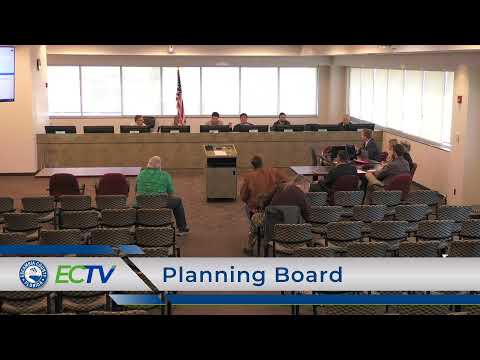
On Jan. 7, 2025 the Escambia County Planning Board voted to forward proposed code changes on stormwater quantity, pond slopes, fencing and maintenance access to the Board of County Commissioners, accompanied by testimony urging a stricter closed-basin standard (7-day / 10-day durations) and higher freeboard.
The Escambia County Planning Board voted on Jan. 7, 2025, to forward proposed amendments to the county’s stormwater design standards (chapter 1, article 1, sections 1‑1.2 and 1‑1.4a) to the Board of County Commissioners, while accepting supplemental public testimony that urged additional closed-basin protections.
Staff and consultant presenters recommended the county adopt NOAA Atlas 14 rainfall values (the current national precipitation dataset) instead of the older FDOT IDF curves (archived in 2024). HDR Engineering consultants Alan Vincent and Philip Walker described a county-level review showing that under Atlas 14 the 100‑year 24‑hour rainfall depth at a sample location increased from about 13.44 inches (historical FDOT IDF) to about 16.2 inches (Atlas 14), and that resulting pond-size changes would typically increase dry-pond volume by about 8–10% and wet-pond volume by about 6–15%, with the largest increases for closed-basin ponds (ponds without a positive outfall).
County Engineer Joy Blackman and HDR staff said adopting Atlas 14 represents “best available science,” would align county practice with FDOT and federal agencies, and increase design resiliency for future storms. Staff noted the change would apply to new designs filed after the county’s adoption; it would not retroactively require rebuilding existing ponds. Blackman also described ongoing efforts to improve homeowner/HOA awareness of pond operation and maintenance options, including MSBU conversions for subdivisions where county maintenance would be preferable.
Chris Curb of Flood Defenders, who said he is an expert in stormwater and engineering for the record, urged a more stringent closed-basin standard. Curb recommended removing the proposed minimum 0.5‑foot (6‑inch) freeboard for closed basins and instead adopting a closed-basin design method that analyzes longer-duration storms: a 100‑year, 7‑day and 10‑day analysis (FDOT uses longer durations for closed basins). He argued that a 6‑inch freeboard is arbitrary and would leave surrounding properties exposed when closed‑basin ponds overflow and recommended that the Planning Board incorporate the longer-duration analysis into the code. Curb provided a written summary for the record and asked the board to forward his material to the BCC as an alternative.
Board members discussed practical consequences, including how new standards would typically reduce usable developable area (fewer lots/parking spaces) because ponds would need larger footprints, and how the county could assist existing HOAs with maintenance responsibilities. Several board members and the county engineer noted the county’s MS4 permit and the Florida Water Management District’s operation-and-maintenance requirements are already increasing expectations for long-term pond upkeep.
After discussion the planning board voted to forward the draft ordinance language recommended by staff to the Board of County Commissioners and to include Chris Curb’s written testimony and alternative closed‑basin recommendation as supplemental evidence for the BCC’s consideration. The BCC hearing was scheduled for Jan. 22, 2025. Staff said the ordinance would apply to future development submissions following BCC approval and would not retroactively change previously permitted ponds. The staff memo and HDR technical review remain part of the public record.