Get Full Government Meeting Transcripts, Videos, & Alerts Forever!
Get email alerts on the School Consolidation topic
No spam. Unsubscribe anytime.
Fairbanks North Star Borough School District recommends closing five elementary schools to cut costs, repurpose one building
Summary
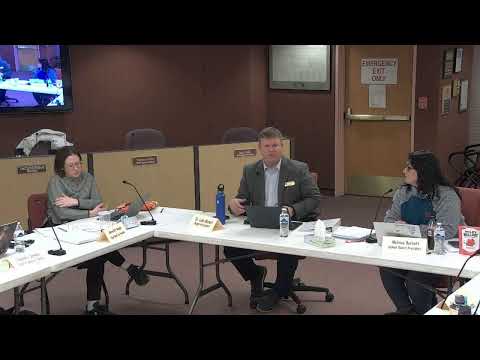
Superintendent Dr. Luke Minor presented the Fairbanks North Star Borough School District administrationrecommendation on Jan. 6, asking the school board to approve the consolidation of five elementary schools to align facilities with enrollment and reduce recurring costs.
Superintendent Dr. Luke Minor presented the Fairbanks North Star Borough School Districtadministrationrecommendation on Jan. 6, asking the school board to approve the consolidation of five elementary schools to align facilities with enrollment and reduce recurring costs.
Administration recommended closing Salcha (to move students to Anderson-Crawford on Eielson Air Force Base), Two Rivers (to Weller and then Tanana Middle School feeder paths), Midnight Sun (to be repurposed and students redistributed to Ticasick Brown and North Pole Elementary), Hunter (students to Denali, University Park and Ladd), and Pearl Creek (students to Wood River, University Park, Anne Wien and a few to Weller). "School consolidation is a necessary step to align resources with enrollment," Dr. Luke Minor said, citing two decades of declining enrollment and an increase in schools and square footage in the district.
Why it matters: the district says consolidations would improve class sizes and the availability of ancillary student supports (counseling, nursing, reading supports), reduce the cost per student of operating small schools, and yield multi-year budgetary savings the administration says are needed to address an estimated FY26 shortfall. Assistant Superintendent Kate LaPlante and Chief Operations Officer Andy DeGraw framed the plan as regional: each candidate school was compared to nearby schools in its geographic area so closures would not create a single-area "domino effect." "We will be able to have a greater number of classes at our target PTR," DeGraw said, explaining that larger grade-band enrollments reduce the frequency of split-grade classrooms.
Details of the recommended closures and capacity impacts
- Salcha Elementary: administration estimated about $1.0 million in annual savings (ongoing). If Salcha students move to Anderson-Crawford, Anderson-Crawford enrollment would rise to about 424 students (approximately 77% capacity under the districtfigures shown).
- Two Rivers Elementary: estimated savings ~ $1.1 million annually. Two Riversstudents would be directed to Weller Elementary (Weller would move to roughly 85% capacity) and feed on to Tanana Middle School.
- Midnight Sun Elementary: recommended for consolidation and repurposing (administrationrecommended a dedicated program/satellite use rather than full abandonment). Projected savings ~ $1.5 million annually; students would shift to Ticasick Brown and North Pole Elementary and the administration stressed repurposing could support BEST program satellites, special‑education child‑find space and other programmatic uses for the North Pole area.
- Hunter Elementary (Central Fairbanks): administration cited an aging facility and steep enrollment decline; estimated savings ~ $1.7 million annually. Students would be redistributed among Denali, University Park and Ladd; a small number would be added to Barnette MagnetSchoolwalk zone.
- Pearl Creek Elementary (West): administration cited end-of-life building systems and being off the city utility system; estimated savings ~ $1.7 million annually. Students would move to Wood River, University Park, Anne Wien and Weller as appropriate.
Administration aggregated the five closures to a projected initial district savings of about $7 million annually during a two-year state "hold harmless" period (administration said the savings would step down and settle at roughly $5.1–$5.2 million per year thereafter). "These are annual perpetual savings," DeGraw said for some items; LaPlante and DeGraw said the hold-harmless treatment on state foundation revenue reduces the near-term effect for two years before a step-down period.
Operational and program details
- Timeline: administration proposed July 1, 2025 as the operational closing date for the schools as attendance centers (students would attend their new schools in the 2025–26 school year). The district proposed different handback/repurpose timelines for the physical buildings: Pearl Creekhandback to the borough in 2026–27 and Hunter in 2027–28 if not repurposed.
- Repurposing: Midnight Sun was recommended for repurposing for BEST satellite operations, special education child-find, or other district/charter uses. Administrators said repurposing can reduce borough impact and create programmatic options for North Pole students.
- Charter schools: administration said state statute protects charter schools from district-ordered closures; the districtmust offer vacated district facilities to charter operators if the board consolidates schools. The administration said charters often pay high private-lease costs and moving a charter into a vacated district facility could reduce their lease costs and shift revenue back under public oversight but that any lease rate and partnership would be negotiated separately.
- Transportation and redistricting: administration said transportation impacts vary; some students may see longer rides, others shorter. More detailed ride-time modeling and maps are scheduled for a Jan. 13 session focused on buildings, transportation and redistricting. Transportation director Mr. Hinton provided background data for the redistricting effort.
- Student supports: administration acknowledged vacancies at some impacted schools (for example, Salcha currently lacks a counselor) and said Student Support Services and BEST staff would work on transition support; detailed supports were scheduled for discussion on Jan. 27.
Board questions and public process
Board members asked about: whether the demographic data distinguished transient military families from long‑term residents (administration said the demographerdata did not separate military vs. civilian residency durations), ride times and base access for students attending an on‑base school (administration said the district had discussed access with base commanders and cited historical precedence for students attending base schools), economic impacts on small communities (administration said economic impact analysis was not in the framework and had not been quantified), charter lease amounts (board asked for data on current charter lease costs and potential revenue implications if charters move into district-owned buildings), and the detail and public availability of the community feedback used to create the framework.
Administration emphasized the process: they described four phases (community feedback; framework development; framework application to form a recommended plan; and the current phase of presenting details and accepting board questions) and said the recommendation grew from a framework developed after community engagement and stakeholder review. LaPlante and DeGraw said the administration visited each candidate school and notified those principals before the public presentation.
No formal board motions or votes were recorded during the Jan. 6 work session; administration said future public sessions on Jan. 13 and Jan. 27 will present more detailed maps, ride times, staffing and student-support plans for board consideration.
A closing note from administration said the district views consolidation as a step toward "revitalizing" programs and, if funding improves, using savings to restore services and reduce class sizes over time. "If we do receive a nice bump in funding ... let's revitalize our school district," Dr. Minor said.
Ending
The board did not take formal action at the Jan. 6 work session. Administrators scheduled follow-up work sessions on Jan. 13 (buildings, transportation, redistricting and staffing) and Jan. 27 (student impacts, special education, Title I and transition supports). The session adjourned after board comments and questions.