Get Full Government Meeting Transcripts, Videos, & Alerts Forever!
Get email alerts on the Planning Small Business Codes topic
No spam. Unsubscribe anytime.
Bloomington Council tentatively backs code changes to ease small-business burdens — parking, materials, grease, odor and refuse under review
Summary
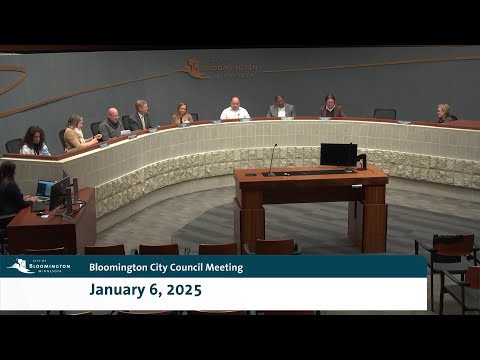
Bloomington City Council members on Monday reviewed a package of proposed changes to zoning and building rules aimed at lowering costs and regulatory barriers for small businesses, giving staff general support to refine several measures and return with an ordinance and public hearing schedule.
Bloomington City Council members on Monday reviewed a package of proposed changes to zoning and building rules aimed at lowering costs and regulatory barriers for small businesses, giving staff general support to refine several measures and return with an ordinance and public hearing schedule.
Planning staff led the study, outlining specific recommendations that ranged from parking flexibility for small commercial and industrial sites to clarifying exterior material rules and rules for refuse storage. Planning Division manager Nick Johnson said the project flows from the council’s 2024 direction to make it easier to start and operate businesses in Bloomington while balancing public health, safety and welfare.
The council and planning commission signaled tentative approval for multiple staff proposals. Most notably, staff proposed a by‑right 25% reduction in off‑street parking requirements for commercial and industrial buildings of 10,000 square feet or less on constrained sites where the city engineer finds no traffic‑safety concern. Johnson said that small reductions “may be the difference” that allows a prospective tenant to use an older building with limited parking.
Staff also recommended clarifying who may approve parking variances (staff or the planning commission for many cases instead of always requiring council action), and flagged a longer planning‑commission review in 2025 to revisit off‑street parking requirements broadly.
Grease interceptors: guidance, not new code
The city’s utilities staff told the council that federal EPA and Met Council wastewater rules require grease control but do not mandate a single mechanical solution. Scott Anderson, utilities superintendent, said the city has long used a 1,000‑gallon external grease interceptor as an industry standard because it reliably meets effluent limits, but that staff will continue to work with businesses case‑by‑case on alternatives when operations and available technology make smaller or internal solutions appropriate.
"There are multiple ways to go about that," Anderson said, noting monitoring options exist but the city lacks current staffing to routinely perform premises‑level effluent testing. Council members urged clearer, consistent outreach to applicants so businesses receive the same information regardless of which inspector they encounter.
Odor control and rooftop screening
Staff proposed lowering the distance that triggers required odor suppression from 250 feet to 150 feet and removing an automatic trigger for Type 2 (steam/vapor) hoods while keeping a general "food‑emitting odors" trigger. Johnson and building staff said many peers rely on visibility from public rights of way as the practical trigger for rooftop‑equipment screening and that the code should expressly target elements visible from public streets and sidewalks.
Exterior materials and coatings
Planning staff recommended allowing painting or recoating of most primary exterior materials (brick, stucco and similar) and lowering the allowed primary:secondary materials ratio on facades from 85:15 to 65:35 to give property owners more flexibility in refreshes and small‑scale storefront remodels. Planner Dakota Kastonday said modern breathable brick stains and the city’s property‑maintenance standards mitigate the main technical objections to painting masonry.
Refuse and recycling storage
Staff presented three options for handling trash and recycling standards: (1) retain current indoor, code‑level standards for almost all uses; (2) require current standards for new construction but allow alternative solutions for existing commercial properties; or (3) permit outdoor enclosures subject to detailed design and siting standards. After discussion, council members generally favored option 2 as a compromise that protects neighbors and public infrastructure while reducing retrofit costs for existing centers. Council members asked staff to return with draft standards and visual examples that show what compliant outdoor enclosures would look like where those are allowed.
Next steps
Planning staff said the planning commission gave unanimous support to many of the recommendations and asked the council for direction on the remaining items. Johnson said staff will prepare ordinance language, outreach materials and graphics and expects to bring a zoning amendment and public hearing back to the planning commission in March and to the council in April.
Council comments focused on consistent application of rules, protecting nearby residents from noise and odor, and creating a clear, predictable process so small businesses and property owners can plan with certainty. Council member D'Alessandro urged staff to work with property owners and brokers to encourage building owners to include required infrastructure in new or renovated spaces so future tenants are not blocked from occupying them.