Get Full Government Meeting Transcripts, Videos, & Alerts Forever!
Get email alerts on the Audit Finance topic
No spam. Unsubscribe anytime.
County audit issues unmodified opinion; auditors report material weaknesses for school board accounting
Summary
External auditors presented the Franklin County comprehensive annual financial report with an unmodified opinion but flagged material weaknesses in school board year‑end receivables and payables; auditors also recommended centralizing school cafeteria accounts under the treasurer.
Franklin County received an unmodified (clean) auditor’s opinion for its comprehensive annual financial report, but the county’s external auditors reported a finding that rose to the level of material weaknesses related to the Franklin County School Board’s year‑end accounting.
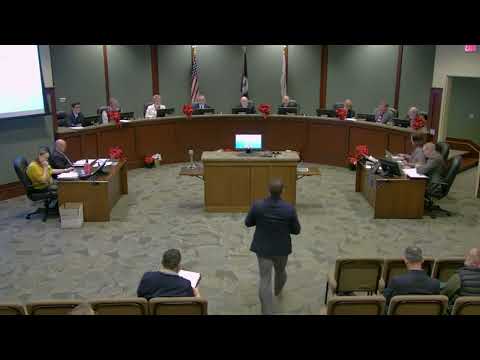
Corbin Stone, lead auditor presenting the report, told the Board of Supervisors that the independent auditors concluded “the financial statements are materially correct” and issued an unmodified opinion. The audit includes a Government Auditing Standards opinion and a federal compliance opinion. Stone also said the audit team recommended certain adjusting entries to school accounts to reflect receivables and payables that had not been posted properly at year end.
Stone described the school board findings as material weaknesses, meaning auditor follow‑up and corrective action plans will be tracked. He said the issues did not involve cash balances; rather the adjustments were largely to receivables and payables and grant‑related amounts that had not been fully recorded. Stone said the school board will include a corrective action plan in its federal filings and auditors expect to follow up in next year’s audit.
The audit presentation covered multiple fiscal measures: auditors reported the county’s general fund revenues have grown at an annualized rate of about 5.4% over eight years and expenditures about 4.8% annually. Fund balances and unassigned fund balance were shown to have grown at higher rates, bringing unassigned fund balance to roughly 27.5% of expenditures, above the Government Finance Officers Association recommended minimum of 16.67%.
Auditors also recommended administrative improvements, including better linkage between the tax/tax‑receivable system and the county general ledger so delinquent taxes can be reconciled monthly. The auditors noted discovery of an unreported Parks & Rec bank account and said the county can now use EIN lookups to find accounts opened under county or school IRS numbers; auditors recommended a monthly review of such accounts and centralizing school cafeteria funds with the treasurer so expenditures are subject to board appropriation.
Stone said the audit contained one reportable finding, and that overall the county’s financial reporting process had improved: the audit was completed earlier than last year. Board members asked about follow‑up timing; Stone said auditors will review progress in next year’s audit and the school board will submit corrective actions with its federal filings.
The board thanked auditor Stone and county staff for early completion and staff said contact information and the full 174‑page audit report are available for board review.
No formal board action was required at the presentation; the audit will be placed on record as presented.