Get Full Government Meeting Transcripts, Videos, & Alerts Forever!
Get email alerts on the School Safety topic
No spam. Unsubscribe anytime.
Verona board opens broad school‑safety discussion; students, staff and parents urge mental‑health supports and careful review of weapons detection options
Summary
Following a recent regional incident, the board discussed student, staff and parent advisory feedback that emphasized mental‑health services, clearer communications, more varied drills and an exploratory review of weapons detection systems and SROs; administrators were asked to return with focused analysis and cost estimates.
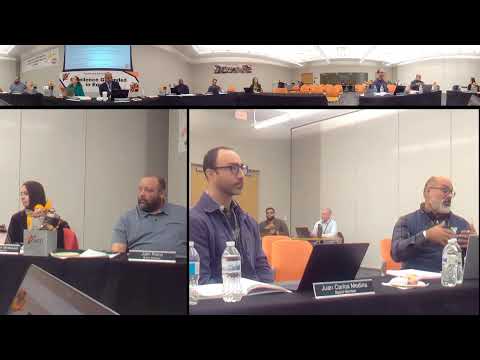
Board members on Monday continued a district workshop on school safety that administrators said was prompted by recent regional incidents. The advisory feedback summarized to the board emphasized three consistent themes: bolstering mental‑health and restorative supports, improving transparent communications to students and families, and evaluating physical security options with an eye toward minimizing an institutional or prison‑like atmosphere.
Dr. Clarity (administrator) told trustees the district convened staff, parent and student advisories after a local tragedy; each group urged clearer, more frequent communications and more realistic drills in varied campus settings (classrooms, lunch, outside). Students in the advisory, Dr. Clarity said, asked for direct messaging to students as well as families: “They are mature enough to be able to handle those type of communications directly to them,” she summarized.
The board discussed a range of security technologies and practices, and administrators said the phrase “metal detector” in public discussion can be misleading: modern options include AI‑driven weapons detection systems that operate without the visible, airport‑style screening some board members imagined. Administrators recommended a preliminary investigation to identify the kinds of systems available, estimated costs, staffing needs and how each option would affect daily school life.
Trustees repeatedly stressed that any physical security investment must be balanced with investments in mental‑health staff and community supports. One board member said: “You can build all the safety structures... but if you don't have that one piece [mental health], it could be for none.”
A written public comment from a parent, Yasmine Lopez of Sugar Creek, was read into the record. Lopez urged the board to consider how police presence can disproportionately affect students of color, writing in part: “Instead of feeling protected, many children of color feel targeted, judged, or even criminalized in places that should nurture them like schools.” The board acknowledged the concern and said student experiences and equity must be central to any decision about School Resource Officers (SROs) or increased police presence.
Board members requested that administration: • Conduct a focused review of common vulnerabilities and "lessons learned" from other incidents to help prioritize small, high‑return changes; • Provide cost estimates and descriptions for a short list of weapons detection technologies (including less visible systems) and the staffing and space implications; and • Return with an analysis of how proposed approaches would affect staff, students and school climate and include equity impact points.
Administrators said they would bring more detailed options and narrow the scope of investigation before the board decides whether to pursue purchases or policy changes. Trustees also suggested the district continue to expand student and family communications and to keep mental‑health staffing and prevention at the center of any safety strategy.