Get Full Government Meeting Transcripts, Videos, & Alerts Forever!
Get email alerts on the Criminal Law Sexual Assault topic
No spam. Unsubscribe anytime.
Appeals court hears debate over "constructive force" jury instruction in Commonwealth v. Graves
Summary
A three-justice panel questioned whether a jury instruction that treats a victim's subjective fear as sufficient proof of constructive force improperly removes an objective element from sexual-assault law during oral argument in Commonwealth v. Graves.
A three-justice panel of the Massachusetts Appeals Court heard arguments over whether the jury instruction in Commonwealth v. Graves improperly allowed a conviction based solely on a victim's subjective fear.
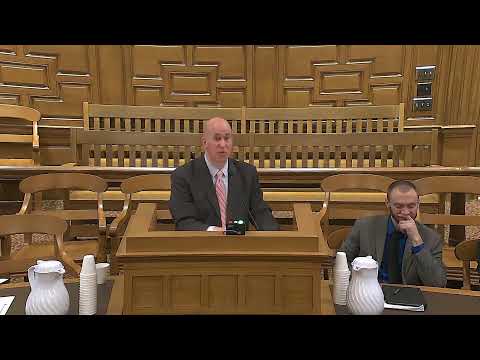
The state and defense debated whether "constructive force" (sometimes called "implied force" in the trial charge) requires an objective component in addition to a victim's testimony that she was afraid. Defense attorney Robert Chekhitov argued that without an objective component, the constructive-force doctrine would be unbounded: "If the person here just absolutely froze ... how could your client accomplish the act without the use of force?" Chief Justice Rubin and Justices Henry and Walsh repeatedly pressed both sides about whether the court should require a showing that a reasonable person would have been intimidated, rather than relying only on the victim's subjective state.
The defense told the panel it could not find case law that adds a separate objective element to constructive force and urged the court to recognize such an element to avoid converting any subjective reaction into criminal liability. "If she was honestly and in fear based on a red shirt, would that be enough?" Chekhitov asked, using a hypothetical developed during the argument.
The Commonwealth's attorney, David McGowan, told the court that case law and the jury instructions properly distinguish actual force, constructive force and threat-of-harm theories, and that penetration without consent can itself support a force finding in many cases. McGowan said the facts here supported either actual or constructive force and that jurors regularly evaluate whether a complainant's fear was caused by the defendant's conduct.
The justices pressed both lawyers on the narrow issue of whether the trial charge diluted the Commonwealth's burden by focusing on the victim's reported fear rather than the surrounding circumstances jurors must consider. The argument explored cases the parties cited — including Armstrong, Sherry and Pereira — and repeatedly returned to how appellate review treats sufficiency-of-the-evidence claims when the record is viewed in the light most favorable to the Commonwealth.
After more than an hour of back-and-forth about hypotheticals and jury instruction language, the panel heard rebuttal and then indicated it would take the matter under advisement. The case was submitted at the close of argument.