
Plymouth planning board endorses petition to restrict commercial uses in agricultural zone
Get AI-powered insights, summaries, and transcripts
Subscribe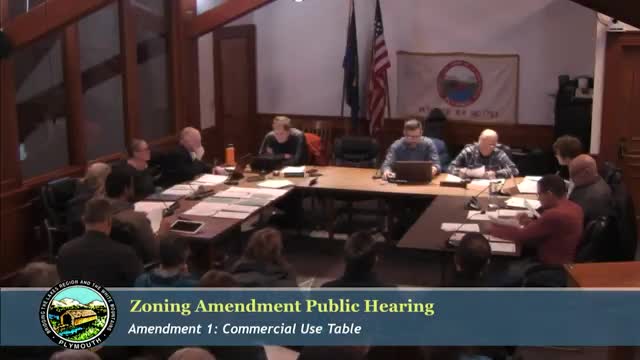
Summary
The Plymouth Planning Board at its Jan. 2 meeting voted to endorse a citizen‑petitioned zoning amendment that would move a number of commercial uses in the town's agricultural zone from permitted uses to special exceptions, sending the measure to the March town meeting ballot.
The Plymouth Planning Board at its Jan. 2 meeting voted to endorse a citizen‑petitioned zoning amendment that would change how several commercial uses are allowed in the town's agricultural zone, moving many from permitted uses to special exceptions. The endorsement directs the amendment to appear on the town meeting ballot in March.
Why it matters: The change would make uses such as some restaurants, retail and other commercial operations subject to the zoning board's special‑exception review rather than being allowed by right, a shift supporters say will help preserve rural and environmental character and opponents say could raise costs and barriers for small, local businesses seeking to operate in agricultural areas.
Supporters at the hearing urged the board to back the petitioned article and let voters decide. Grace Garvey, a property owner in the agricultural zone, said, "I support these' . . . put it in front of the voters." Danielle Sergeant, another resident, told the board the proposal "preserve[s] the agricultural zone and rural character of our community" and argued that the special‑exception process would allow the public and the zoning board to limit scale and scope.
Opponents and some board members warned the change could unintentionally disadvantage local entrepreneurs who rely on lower‑cost parcels in rural areas. Colby Leonardine, who said he operates three local businesses, described how he purchased land outside the town's primary commercial corridor to start and grow a business and said tighter rules "could really have a steep impact on someone that would be willing to be part of our community." Another speaker, who identified himself as a long‑time agricultural landowner, said, "I am opposed to all these changes of our ability to do our land what we want."
Planning board members debated two related items: the petitioned amendment (certified by the select board) and a near‑identical amendment drafted by the planning board itself. After the public hearing the planning board voted to endorse the petitioned amendment and to withdraw the board's own duplicate draft from the warrant.
What the amendment would change: The petition would move a number of commercial entries in the town's commercial use table for the agricultural zone from "permitted" to "special exception." Under Plymouth's ordinance a special exception requires review by the zoning board, with criteria such as impacts on traffic, parking, neighborhood character and public welfare.
Next steps: The endorsed petition will appear on the March town meeting ballot. If voters approve, those use changes would become part of the zoning ordinance; developers and property owners would then follow the updated procedures for any applications in the agricultural zone.
Public comment and board context: Speakers for and against the amendment included residents, property owners and representatives of the Conservation Commission. Joan Turley, chair of the Conservation Commission, said the changes "allow the town of Plymouth to be very deliberate about their way to protect the land" and stressed environmental and flood‑risk concerns. Planning Board Chair John (chair) repeatedly noted the board could still refine future zoning language and that the change is part of an incremental process.
The meeting record shows robust public engagement on the topic and repeated requests from board members for clearer definitions and more work on scale and implementation if the amendment moves forward.
Ending: The endorsement sends the citizen petition to the voters in March, while leaving open future work by the board on more detailed definitions and zoning tools that speakers said they wanted to see added later.