
Lexington Commonwealth’s Attorney asks council for $13,000 to help launch regional recovery court coordinator post
Get AI-powered insights, summaries, and transcripts
Subscribe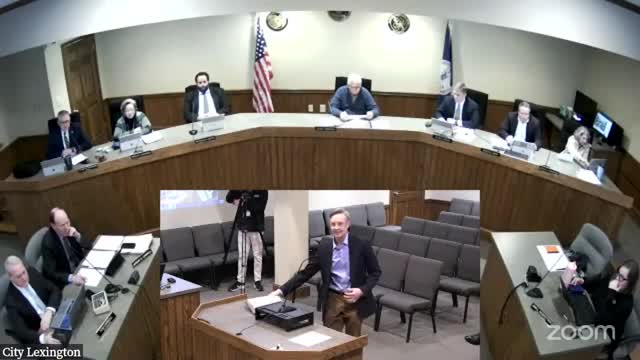
Summary
Commonwealth’s Attorney Josh Elrod told the City Council Jan. 2 that a full‑time recovery court coordinator is needed to start a regional recovery court; he asked Lexington to contribute $13,000 of an estimated $76,000–$77,000 first‑year cost. Council took no formal action but signaled support and noted available opioid‑abatement funds.
Commonwealth’s Attorney Josh Elrod asked the Lexington City Council on Jan. 2 to consider contributing $13,000 toward a full‑time coordinator position for a newly approved recovery court that will serve Lexington, Rockbridge County and Buena Vista.
Elrod told council the Virginia Supreme Court has approved the locality’s application to operate a recovery court and the committee organizing it now needs funding to hire a coordinator. “We are asking the city of Lexington to consider allocating $13,000 basically for the current year,” Elrod said, adding that the total first‑year cost for the coordinator is “about 76, $77,000.” He said Rockbridge County has indicated it would provide roughly $50,000 toward the same position.
The recovery court is a specialty docket that teams judicial oversight with treatment supports for people with substance use disorder. Elrod described the coordinator as a full‑time position that will act as liaison between the judge and the treatment team and will supervise participants, who will meet with the coordinator and appear in court on a weekly basis. He said the program’s typical length is “about 12 to 18 months.”
Elrod said enrollment requires the participant’s interest and concurrence from the Commonwealth’s attorney, defense counsel and the presiding judge; if those parties agree and the participant completes the program, a jail sentence may be suspended. “So, to answer your question, yes. A jail sentence could be suspended,” Elrod said.
Blue Ridge Court Services will serve as the employer for the coordinator and provide office space in Lexington, Elrod said. He named Megan Rhone as the Blue Ridge Court Services executive director and said the organization already operates related pretrial and recovery‑court services elsewhere in the region.
Elrod outlined potential funding sources beyond local contributions, including grants and state allocations and the Virginia Opioid Abatement Authority. “There’s a lot of funding out there that is available for programs like this,” he said, but warned that grant funding can end and observers often look for local investment before committing larger, recurring grants.
No formal vote was taken. The city manager’s memo noted that the city has funds in its opioid account and council members voiced general support for pursuing the project. The mayor asked the city manager to follow up on next steps if council wishes to proceed with the allocation.
Why it matters: The recovery court model combines judicial oversight with community treatment to reduce recidivism and reliance on incarceration, and proponents told council the program is already operating in neighboring jurisdictions and collects outcome data through the Virginia court system.
What’s next: Elrod said organizers hope to hire the coordinator and begin operations by April 1, subject to securing the remaining funding and administrative steps.