Get Full Government Meeting Transcripts, Videos, & Alerts Forever!
Get email alerts on the Waste Management Landfill topic
No spam. Unsubscribe anytime.
Commissioners press pause on new bioreactor work, seek engineering review after landfill problems
Summary
Multiple commissioners raised concerns about the county landfill's bioreactor operations, leachate PFAS, gas releases and the contract with CTI; a motion to put CTI's engineering work out to bid was proposed then withdrawn while commissioners requested a technical report and a workshop.
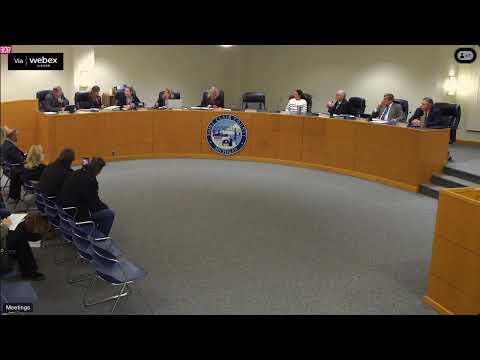
Commissioners raised extensive concerns about the St. Clair County landfill's bioreactor operations, ongoing leachate and gas issues, and the county's contract with engineering firm CTI during the organizational meeting.
Commissioner Robert Felix reviewed the county's history with the bioreactor and said changing regulatory standards and PFAS contamination in leachate have increased costs and risks. He said the county spent roughly $2.1 million on CTI in 2024 for landfill administration and that revenue from landfill electricity sales was about $520,000 in 2024 with additional payments expected.
Felix argued the bioreactor produces higher gas volumes than a conventional dry cell landfill and raised the risk of enforcement actions and litigation. "There will be little future funding available in this state for bioreactors," he said, and described potential legal and environmental liabilities tied to increased gas production and PFAS in leachate.
Commissioner David Rushing and others cautioned about abrupt moves during an ongoing enforcement action and said the engineering firm's work is important to contain current problems. A motion was made to put CTI's landfill engineering work out for competitive bid; the motion was later withdrawn so that staff and the landfill director could answer technical questions first.
Commissioners asked landfill director Matt Williams and staff to prepare a written report to the board addressing key questions including the term of the DTE electricity contract (described in discussion as a 20-year agreement entered around 2012), the cost and schedule implications of stopping bioreactor injection, and how far landfill airspace would be reduced under a dry-landfill alternative. The board also asked staff to include the Tetra Tech review of PFAS and pretreatment options, which administration scheduled to present at a future full-board meeting. Tetra Tech's proposed pretreatment option line-item was discussed in the meeting (approximate cost of $1.8 million cited by staff for a foam-fractionation pretreatment approach).
Why it matters: Commissioners framed the issue as both a community quality-of-life matter (odors, gas releases) and a long-term infrastructure decision with major cost and environmental implications. Commissioners asked for technical materials and a workshop so the board can make an informed decision about future bioreactor work and the engineering contract.
Next steps: Landfill staff will prepare a technical briefing for commissioners at the next meeting, Tetra Tech will present its PFAS/leachate recommendations to the full board, and commissioners said they may form a focused process (workshop or committee review) to evaluate future landfill engineering and operations.