Get Full Government Meeting Transcripts, Videos, & Alerts Forever!
Get email alerts on the Land Use Zoning topic
No spam. Unsubscribe anytime.
Marshall County adopts two-year moratoriums on large solar, battery storage, data centers and carbon-capture projects
Summary
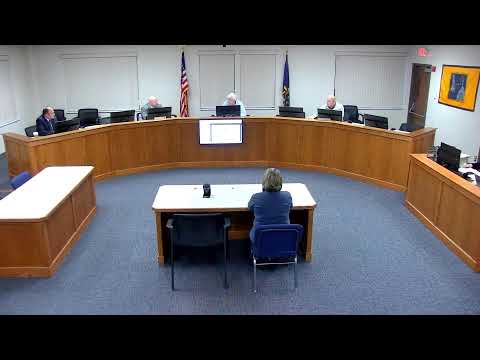
The Marshall County Board of Commissioners voted unanimously at a Jan. 2 special meeting to enact separate two-year moratoriums on farm-scale/industrial solar projects, utility-scale battery energy storage, data centers and carbon-capture developments while the county and planning commission develop new standards.
The Marshall County Board of Commissioners voted Jan. 2 to enact four separate two-year moratoriums halting new large-scale solar, commercial battery storage, data center and carbon-capture projects while county officials and the planning commission develop updated land‑use standards.
Commissioners adopted four ordinances — designated in the package as PC-25 PC-1 through PC-25 PC-4 — that pause permitting for (1) farm-scale solar projects defined in the ordinance as projects with more than 10 acres of panel area; (2) utility‑scale battery energy storage systems using the state statutory definition that excludes small home-based systems; (3) data centers governed by existing ordinance definitions; and (4) carbon‑capture projects defined to incorporate Indiana’s statutory chapter on underground storage of carbon dioxide. Each moratorium is set to last two years from the date of formal adoption, the county attorney told commissioners.
County legal counsel explained that under state zoning statutes an amendment to the zoning ordinance may be initiated either by the plan commission or by the county commissioners as the county’s legislative body and that the moratoria are being proposed as temporary amendments to give the county time to draft additional development standards. "This would pause that development for a period of two years for farm‑scale solar energy systems," the attorney said, adding that the battery definition was revised in the draft to explicitly reference batteries.
The attorney and the commissioners said the next step, if the moratoria are approved, is to refer the proposed amendments to the planning department so the plan commission can schedule public hearings and then forward a recommendation — favorable, unfavorable or none — back to the commissioners for final action. "If approved by the commissioners … I would reach out to the planning department and work with them to set a public hearing on each of these, for public input," the attorney said.
Commissioners clarified scope during the discussion. One commissioner asked whether residential or small roof‑mount solar would be affected; the attorney confirmed the moratoria apply only to the large categories in the draft — essentially projects of 10 acres of panel area or larger and utility‑scale systems — and do not cover smaller ground‑mounted or roof‑mounted installations or home storage units. "There are several other categories that are defined under the existing zoning ordinance … that would not be affected by this, just the larger 10‑acre and above panel area," he said.
The board voted to adopt each moratorium separately. For each item, the motion was seconded and, after a voice vote of "aye," the chair declared the motion carried. Commissioners did not record a roll‑call vote in the meeting transcript.
Why it matters: county leaders said the pause will allow time for the planning commission and county counsel to develop or refine definitions, setbacks, safety and decommissioning requirements and other development standards before new large projects proceed. By limiting the moratoriums to large or utility‑scale projects and excluding small residential systems, commissioners said they sought to preserve homeowner options while addressing potential impacts from industrial‑scale developments.
The moratoriums take effect following formal adoption; planning‑commission public hearings will be scheduled next and any final ordinance changes would return to the commissioners for action.