Get Full Government Meeting Transcripts, Videos, & Alerts Forever!
Get email alerts on the Public Lands topic
No spam. Unsubscribe anytime.
American Lands Council updates Mohave County on Utah v. United States and proposed state land transfers
Summary
Jennifer Fielder, chief executive officer of the American Lands Council, told the Mohave County Public Lands and Recreation Commission on Jan. 2 that a pending U.S. Supreme Court question and proposed federal legislation could affect millions of acres of Bureau of Land Management lands and urged counties to prepare resource plans and consider rejoining the council.
Jennifer Fielder, chief executive officer of the American Lands Council and a former Montana state senator, gave a remote presentation to the Mohave County Public Lands and Recreation Commission on Jan. 2 about litigation and legislative efforts to transfer certain federal lands to states.
Fielder said the central legal matter is Utah v. United States, a suit Utah filed on Aug. 20, 2024, asking the U.S. Supreme Court to decide whether the federal government may indefinitely retain unappropriated Bureau of Land Management land inside state borders. "The simple premise is statehood equality," Fielder told commissioners, summarizing the suit's legal theory and the long history behind it.
Why it matters: Fielder said the court's decision could affect tens of millions of acres in Western states. She told the commission that Utah was focused on about 18,500,000 acres inside its borders and that the constitutional question could apply to roughly 200,000,000 acres of BLM land across the West. Mohave County was among local governments that have supported the legal work; Fielder said Mohave County previously contributed to litigation and joined an amicus brief filed by the American Lands Council.
Fielder described two tracks of work. The first is litigation: Utah asked the Supreme Court to take the case under its original jurisdiction; the U.S. government filed a brief opposing Utah on Nov. 21, 2024, and a motion to intervene was filed by a Ute tribe, she said. The court was expected to decide in January whether to accept the case as one of original jurisdiction. The second is legislation: the American Lands Council has drafted a short federal bill called the National State Lands Act to provide a voluntary, phased process for states to request conveyance of specified federal lands and to attach conditions, such as protection for existing mineral, grazing and water rights and a requirement that lands designated to remain public be managed for the stated public purpose.
On wildfire management and federal land practices, Fielder asserted a connection between federal land-management policies and larger, more destructive fires. She said federal timber harvest has fallen nationally about 70 percent and cited a 2013 U.S. Department of Agriculture report that, in its presentation to Montana regulators, described more than 10,000 miles of major transmission lines at risk on national forest lands. Fielder also relayed findings she attributed to retired federal firefighters and private wildfire consultants who, she said, documented unusual ignition patterns and use of drones to start ignitions in some incidents. "They're using drones to drop incendiary devices to ignite fires to expand fire boundaries," she said. Commissioners raised questions; Fielder attributed the term "administrative intent" to regional supervisors and incident management teams as shaping some incident decisions.
Fielder recommended counties prepare now, whether or not litigation succeeds. She described Utah's approach of having each county adopt a resource-management plan that the state could compile into a coordinated state plan, and she pointed commissioners to Utah's public-lands planning materials and to americanlandscouncil.org for white papers and the group's federal-fault-line series. "Local care of the land, transfer of federal lands to the states has already been done before," she said, characterizing prior transfers of state trust lands to states under enabling acts and arguing state management often produces net revenue.
Fielder presented figures from the Property and Environmental Research Center, saying that, as of a prior study, the federal government recovered about $0.73 for every $1 spent managing public land, while some states generated much more on a per-dollar basis (she cited Idaho, Montana and Arizona). She said the American Lands Council's amicus-stage filing included 27 partners and that 11 amicus briefs were filed broadly to encourage the Supreme Court to hear the question.
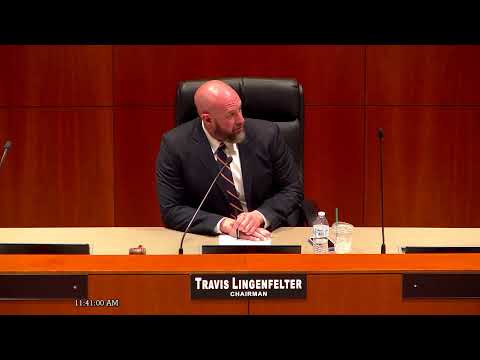
Commissioners praised the presentation, asked technical and policy questions, and discussed next steps. Commissioner Barlow asked about where incident directives originate; Fielder said regional offices set "administrative intent" and that more documentation from federal agencies is needed. Commissioner Diaz pressed whether intentional enlargements of fires were tied to climate messaging; Fielder said multiple motives exist and that she had seen signs of an organized narrative on climate. Several commissioners noted concerns about monument designations; Chairman Lingenfelter and others referenced the Biden administration's designation of the Baja National Monument and the county's existing participation in litigation or amicus filings related to that monument.
Outcomes and next steps: Fielder asked Mohave County to consider rejoining the American Lands Council as a dues-paying member; she also agreed to present to the Mohave County Board of Supervisors and said she would bring other ALC executive members. Commissioners and State Senator Hilda Angus encouraged closer coordination among counties, the state legislature and membership organizations. No formal vote or county action was recorded during the meeting on the litigation or the membership request.
Commissioners and Fielder repeatedly framed the discussion as preparatory: potential legal change remains pending before the Supreme Court and any transfers would require congressional or court-directed processes. The commission agreed to follow up with county staff and to consider organizing briefings and planning resources for county-level resource management.
A note on assertions: several claims presented to the commission (for example, drone-initiated ignitions and intentional enlargement of fires) were attributed in the meeting to retired federal managers and private wildfire consultants and were presented as the American Lands Council's interpretation of wildfire-forensics material. Those claims were reported here as attributed statements and not independently verified by the commission during the meeting.