Get Full Government Meeting Transcripts, Videos, & Alerts Forever!
Get email alerts on the Court Docket Updates topic
No spam. Unsubscribe anytime.
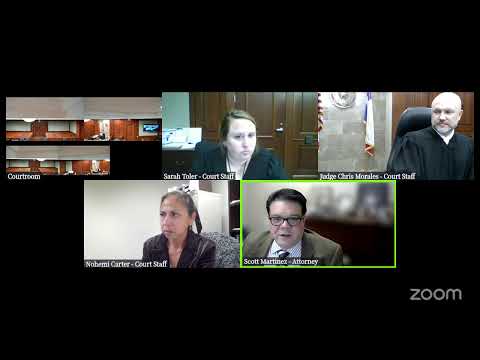
Fort Bend County Court at Law No. 1 holds virtual docket; plea dates set, bonds reset and counsel changes recorded
Summary
Judge Morales presided over a virtual docket with status updates across multiple cases, setting plea dates, recording a withdrawal of counsel and appointing new defense counsel, and resetting bonds in two matters.
Fort Bend County Court at Law No. 1 convened a virtual docket presided over by Judge Morales where multiple criminal status updates, plea dates and administrative actions were recorded.
The docket covered individual status reports on dozens of matters. The court set plea dates in several cases, granted a motion to withdraw counsel in one matter and appointed new counsel in another, and reset bonds after motions from the state to forfeit bond. Several defendants were ordered to complete diversion programs or restitution before dismissal could proceed.
The status hearing matters are routine but affect scheduling, custody and case resolution for the defendants involved. The court repeatedly instructed attorneys to notify court coordinator Sarah Toler when defendants completed diversion contracts or other terms, and set a series of next status or plea dates across matters.
In the most notable administrative actions, Judge Morales set a plea date for the case State of Texas v. Demetrio Washington (24 CCR 239408) for Jan. 14 at 1:30 p.m. Defense counsel reported they had conferred with the defendant and would likely enter a plea within a week. Judge Morales told counsel, “If you don't need it, you can always contact Sarah and say, we'll pass the hearing.”
In State of Texas v. Carlos Perez Jr. (24 CCR 238239), defense counsel told the court the client had accepted the state's terms; the parties set a plea date for Jan. 16 at 1:30 p.m. The court reminded counsel to coordinate with the prosecutor and the court clerk to confirm a plea setting.
The court recorded at least two bond resets after the state moved to forfeit bond in separate matters. The judge announced, “New bonds set in the amount of $3,000. All bond conditions issued on January 19, 2024 shall remain in place.” In a separate matter after a bond-forfeiture discussion, the court set a new bond at $5,000 and kept prior bond conditions in effect.
Judge Morales granted an agreed motion to withdraw counsel in the case of State of Texas v. Fernando Badillo (24 CCR 237415) after defense counsel and the client filed the motion on Dec. 20; the judge ordered the withdrawal and directed court staff to contact indigent defense for reappointment. The transcript shows NGINET Defense later was recorded as appointing Ralph Gonzalez to that case; the court set the next status date for March 13 at 2:30 p.m.
Several defendants were told to complete diversion programs or restitution before cases would be dismissed. For example, in State of Texas v. Damon Duane Mays Jr. (24 CCR 239-759), counsel said the case would be dismissed upon payment of restitution of about $500; the court accepted that plan and released the defendant pending payment. In other retail-theft matters, counsel reported clients had paid program fees and were to execute diversion contracts at the courthouse; the court repeatedly instructed counsel to notify Sarah Toler once the defendant had executed the contract.
Multiple cases were continued to the court’s next broadly scheduled status dates: March 13 (many matters) and, for one juvenile matter (State of Texas v. Amariah London, 24 CCR 238765–238767), a status conference on May 13 ahead of the pretrial conference. In each instance the court emphasized that counsel should confirm scheduling with the prosecutor and the court coordinator.
The docket included routine administrative directions rather than contested hearings: the judge often closed each matter with the instruction, “You and your client are free to go,” after setting dates or recording status updates.
Looking ahead, the court left multiple matters on calendar for March 13 and reminded counsel to file or deliver signed diversion contracts, restitution payments, or responses to the district attorney's office before the next settings.