Get Full Government Meeting Transcripts, Videos, & Alerts Forever!
Get email alerts on the Administrative Code Appointment topic
No spam. Unsubscribe anytime.
Council adopts ordinance clarifying appointment process for administrative chiefs
Summary
On second reading the Williamsport City Council approved an amendment to the administrative code clarifying which ranks qualify as "administrative chiefs" in police and fire, codifying an existing practice. The ordinance passed 4-1.
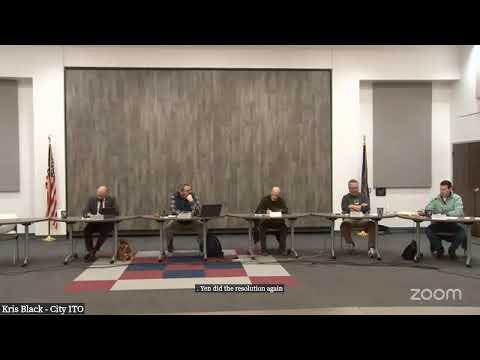
The Williamsport City Council on Jan. 2 approved on second reading an amendment to the city’s administrative code that defines “administrative chiefs” and clarifies the appointment process for those ranks in the police and fire departments.
The ordinance passed 4-1 on second reading after the council voted to remove the item from the table. Councilmember Reiter recorded the lone dissent.
The amendment defines administrative chiefs to include all ranks above platoon chief in the fire department and ranks above lieutenant in the police department, and it confirms that appointment practices in those positions follow established local procedure. Austin White, who presented the amendment, said the change “is not to change anything. It’s just to confirm what is already the practice for decades.”
White told council staff had researched how comparable third-class cities structure these appointments and found variation across jurisdictions: in Lancaster the mayor appoints administrative positions upon the department chief’s recommendation; in York some superior-officer appointments are made by the police chief while other promotions use a civil-service eligibility list; in Bethlehem the mayor makes final promotion decisions; in Erie the mayor appoints administrative positions based on the chief’s recommendations. White said the review supported codifying the city’s longstanding practice rather than changing it.
Council voted first to remove the ordinance from the table (motion passed 5-0) and then passed the second reading 4-1. The ordinance, if enacted, will be included in the city’s 2025 codified ordinances because the final reading occurred in 2025.
No public comment was recorded on the amendment during the meeting.